Readings Newsletter
Become a Readings Member to make your shopping experience even easier.
Sign in or sign up for free!
You’re not far away from qualifying for FREE standard shipping within Australia
You’ve qualified for FREE standard shipping within Australia
The cart is loading…


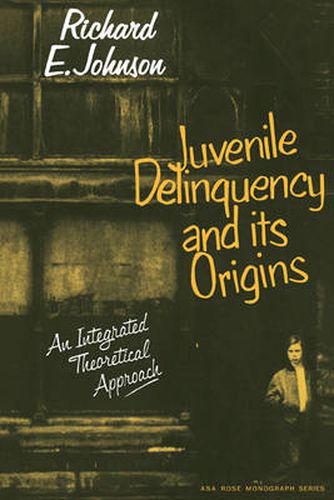
First published in 1979, this book examines past thought and research about the social and psychological causes of juvenile delinquency in Western society. The first few chapters summarise major delinquency theories and survey an extensive list of studies that demonstrate those theories. The author then develops a single model of individual causation from the divergent theoretical traditions. The model includes such variables as social class, parent-child relations, school experiences, strain, peer relations, personal values and the perceived risk of being caught in lawbreaking. Testing the model with information from 734 large-city adolescents results in several innovations in the measurement and conceptualisation of key variables in delinquency research. In his search for a better understanding of delinquency, the author shows the usefulness of examining the impact of all the variables at once and finds that the major theories of delinquency complement rather than contradict one another.
$9.00 standard shipping within Australia
FREE standard shipping within Australia for orders over $100.00
Express & International shipping calculated at checkout
Stock availability can be subject to change without notice. We recommend calling the shop or contacting our online team to check availability of low stock items. Please see our Shopping Online page for more details.
First published in 1979, this book examines past thought and research about the social and psychological causes of juvenile delinquency in Western society. The first few chapters summarise major delinquency theories and survey an extensive list of studies that demonstrate those theories. The author then develops a single model of individual causation from the divergent theoretical traditions. The model includes such variables as social class, parent-child relations, school experiences, strain, peer relations, personal values and the perceived risk of being caught in lawbreaking. Testing the model with information from 734 large-city adolescents results in several innovations in the measurement and conceptualisation of key variables in delinquency research. In his search for a better understanding of delinquency, the author shows the usefulness of examining the impact of all the variables at once and finds that the major theories of delinquency complement rather than contradict one another.
Search our extensive online catalogue.
