Readings Newsletter
Become a Readings Member to make your shopping experience even easier.
Sign in or sign up for free!
You’re not far away from qualifying for FREE standard shipping within Australia
You’ve qualified for FREE standard shipping within Australia
The cart is loading…


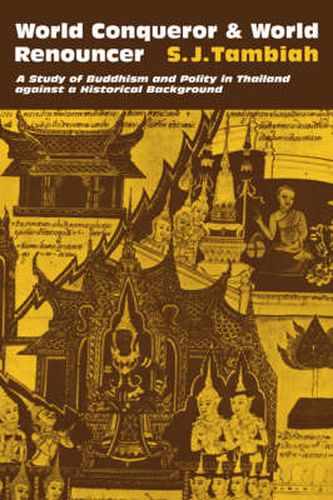
World Conqueror and World Renouncer is the first comprehensive and authoritative work on the relationship between Buddhism and the polity (political organization) in Thailand. The book conveys the historical background necessary for full comprehension of the contemporary structural relationship between Buddhism, the sangha (monastic order), and the polity, including the historic institution of kingship. Professor Tambiah delineates the overall relationship, as postulated in early Buddhism, between the monk’s otherworldly quest on one side and the this-worldly ordinating role of the monarchy on the other. He also examines the complementary and dialectical tensions that occur in this classical relationship, the king’s duty to both protect and purify the sangha being a notable example.
$9.00 standard shipping within Australia
FREE standard shipping within Australia for orders over $100.00
Express & International shipping calculated at checkout
Stock availability can be subject to change without notice. We recommend calling the shop or contacting our online team to check availability of low stock items. Please see our Shopping Online page for more details.
World Conqueror and World Renouncer is the first comprehensive and authoritative work on the relationship between Buddhism and the polity (political organization) in Thailand. The book conveys the historical background necessary for full comprehension of the contemporary structural relationship between Buddhism, the sangha (monastic order), and the polity, including the historic institution of kingship. Professor Tambiah delineates the overall relationship, as postulated in early Buddhism, between the monk’s otherworldly quest on one side and the this-worldly ordinating role of the monarchy on the other. He also examines the complementary and dialectical tensions that occur in this classical relationship, the king’s duty to both protect and purify the sangha being a notable example.
Search our extensive online catalogue.
