Readings Newsletter
Become a Readings Member to make your shopping experience even easier.
Sign in or sign up for free!
You’re not far away from qualifying for FREE standard shipping within Australia
You’ve qualified for FREE standard shipping within Australia
The cart is loading…


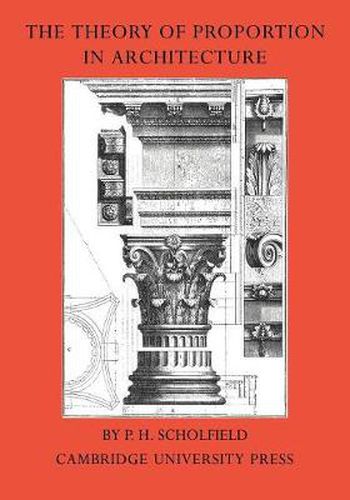
A building cannot be good to look at if it is unplanned, with its parts totally unrelated to one another; but on the other hand if the arrangement is too regular it becomes boring and dull. The object of architectural proportion is to strike the balance between these extremes, creating an interesting visible order by the repetition of similar shapes. In this book, first published in 1958, Mr Scholfield deals with the history of the theory of proportion, and in doing so develops his own positive theory, which reconciles the apparent contradictions of rival systems and serves as a key to historical understanding. Even when he is dealing with complex themes, Mr Scholfield’s exposition can be followed by the uninitiated reader. Those already interested in architecture and the visual arts will certainly want the book; and those who are not will find, on reading it, that their interest is stimulated.
$9.00 standard shipping within Australia
FREE standard shipping within Australia for orders over $100.00
Express & International shipping calculated at checkout
Stock availability can be subject to change without notice. We recommend calling the shop or contacting our online team to check availability of low stock items. Please see our Shopping Online page for more details.
A building cannot be good to look at if it is unplanned, with its parts totally unrelated to one another; but on the other hand if the arrangement is too regular it becomes boring and dull. The object of architectural proportion is to strike the balance between these extremes, creating an interesting visible order by the repetition of similar shapes. In this book, first published in 1958, Mr Scholfield deals with the history of the theory of proportion, and in doing so develops his own positive theory, which reconciles the apparent contradictions of rival systems and serves as a key to historical understanding. Even when he is dealing with complex themes, Mr Scholfield’s exposition can be followed by the uninitiated reader. Those already interested in architecture and the visual arts will certainly want the book; and those who are not will find, on reading it, that their interest is stimulated.
Search our extensive online catalogue.
