Readings Newsletter
Become a Readings Member to make your shopping experience even easier.
Sign in or sign up for free!
You’re not far away from qualifying for FREE standard shipping within Australia
You’ve qualified for FREE standard shipping within Australia
The cart is loading…


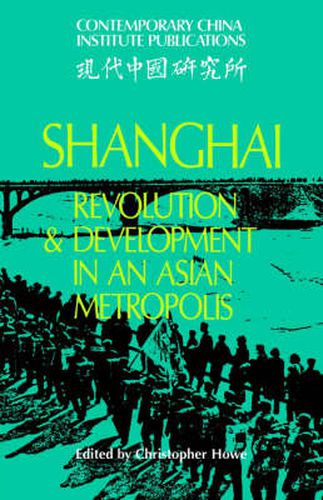
Shanghai is Asia’s largest city and for over a hundred years has played a critical role both in China’s internal political arid economic affairs, and in the history of International relations in the Far East. Before 1949, Shanghai was the principal point of western and later, Japanese, penetrations of China. Under foreign control the city saw the beginnings of modern economic growth, of new forms of westernized education and culture, and of fierce social and political conflicts. This book is the first comprehensive study of the way in which old Shanghai was transformed and developed by the Communist Party between 1949 and the later 1970s. It throws light on the paradox that a city that for years was the object of hostility and distrust has become in the Post-Mao era the spearhead of China’s new programme for economic and technological modernization. The book is divided into sections dealing with political, economic and cultural change, and with the special characteristics of Shanghai’s rural suburbia. The political chapters concentrate on Shanghai’s role in the Cultural Revolution and how this paved the way for the rise and fall of the Gang of Four in the 1970s. Other chapters deal with the standard of living, industrial and agricultural development, and the changing patterns of cultural and ideological activity.
$9.00 standard shipping within Australia
FREE standard shipping within Australia for orders over $100.00
Express & International shipping calculated at checkout
Stock availability can be subject to change without notice. We recommend calling the shop or contacting our online team to check availability of low stock items. Please see our Shopping Online page for more details.
Shanghai is Asia’s largest city and for over a hundred years has played a critical role both in China’s internal political arid economic affairs, and in the history of International relations in the Far East. Before 1949, Shanghai was the principal point of western and later, Japanese, penetrations of China. Under foreign control the city saw the beginnings of modern economic growth, of new forms of westernized education and culture, and of fierce social and political conflicts. This book is the first comprehensive study of the way in which old Shanghai was transformed and developed by the Communist Party between 1949 and the later 1970s. It throws light on the paradox that a city that for years was the object of hostility and distrust has become in the Post-Mao era the spearhead of China’s new programme for economic and technological modernization. The book is divided into sections dealing with political, economic and cultural change, and with the special characteristics of Shanghai’s rural suburbia. The political chapters concentrate on Shanghai’s role in the Cultural Revolution and how this paved the way for the rise and fall of the Gang of Four in the 1970s. Other chapters deal with the standard of living, industrial and agricultural development, and the changing patterns of cultural and ideological activity.
Search our extensive online catalogue.
