Readings Newsletter
Become a Readings Member to make your shopping experience even easier.
Sign in or sign up for free!
You’re not far away from qualifying for FREE standard shipping within Australia
You’ve qualified for FREE standard shipping within Australia
The cart is loading…


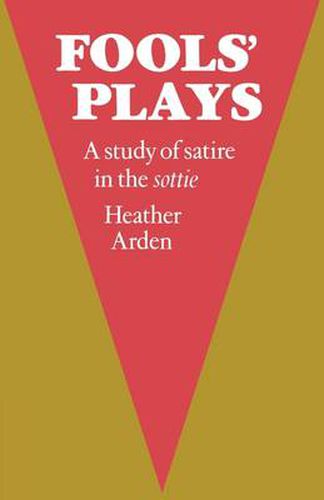
The sottie was a short, comical play which flourished in France from about 1440 to 1560. Although a vital part of late medieval popular culture, this dramatic genre has received scant critical attention. In this study, Dr Arden adds to our understanding of the sottie by examining in detail the subjects satirised in the plays, the dramatic structure underlying this satire, the attitudes expressed by the plays, and their social function in late medieval France. Through an approach combining critical readings of the texts with historical study of class structure and its evolution in this period, she offers a fresh interpretation of a remarkable type of satire. In addition to analysing the undercurrent of class conflict in late medieval theatre, Dr Arden clarifies lower-class values of the period and suggests a reason for the widespread fascination with folly and the fool in the late Middle Ages.
$9.00 standard shipping within Australia
FREE standard shipping within Australia for orders over $100.00
Express & International shipping calculated at checkout
Stock availability can be subject to change without notice. We recommend calling the shop or contacting our online team to check availability of low stock items. Please see our Shopping Online page for more details.
The sottie was a short, comical play which flourished in France from about 1440 to 1560. Although a vital part of late medieval popular culture, this dramatic genre has received scant critical attention. In this study, Dr Arden adds to our understanding of the sottie by examining in detail the subjects satirised in the plays, the dramatic structure underlying this satire, the attitudes expressed by the plays, and their social function in late medieval France. Through an approach combining critical readings of the texts with historical study of class structure and its evolution in this period, she offers a fresh interpretation of a remarkable type of satire. In addition to analysing the undercurrent of class conflict in late medieval theatre, Dr Arden clarifies lower-class values of the period and suggests a reason for the widespread fascination with folly and the fool in the late Middle Ages.
Search our extensive online catalogue.
