Readings Newsletter
Become a Readings Member to make your shopping experience even easier.
Sign in or sign up for free!
You’re not far away from qualifying for FREE standard shipping within Australia
You’ve qualified for FREE standard shipping within Australia
The cart is loading…


Post-modernist fiction apparently presents a world of chance and randomness, devoid of historical intelligibility. Focusing on American post-modernist writers, Stacey Olster offers a challenge to this perception, showing how the experience of political and historical events has shaped the novelist’s perspective. Communism after World War II proved particularly instrumental in this capacity; the failure of the Communist ideal in Russia forced a change in the literary perspective of history during the 1950s. Olster analyzes in detail historical narrative configurations in the works of a pivotal group of writers. Norman Mailer, Thomas Pynchon, John Barth, Robert Coover and E. L. Doctorow share a common vision of historical movement in the shape of an open-ended spiral. The modes of temporal movement constructed by these authors manage to recall an early Puritan prototype while remaining nonapocalyptic in direction.
$9.00 standard shipping within Australia
FREE standard shipping within Australia for orders over $100.00
Express & International shipping calculated at checkout
Stock availability can be subject to change without notice. We recommend calling the shop or contacting our online team to check availability of low stock items. Please see our Shopping Online page for more details.
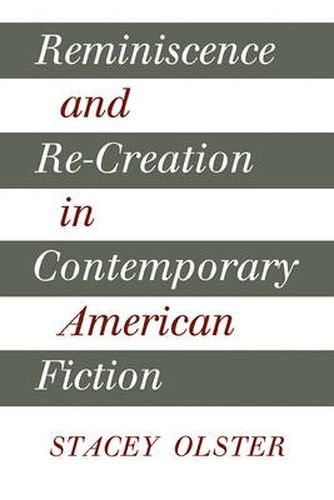
Post-modernist fiction apparently presents a world of chance and randomness, devoid of historical intelligibility. Focusing on American post-modernist writers, Stacey Olster offers a challenge to this perception, showing how the experience of political and historical events has shaped the novelist’s perspective. Communism after World War II proved particularly instrumental in this capacity; the failure of the Communist ideal in Russia forced a change in the literary perspective of history during the 1950s. Olster analyzes in detail historical narrative configurations in the works of a pivotal group of writers. Norman Mailer, Thomas Pynchon, John Barth, Robert Coover and E. L. Doctorow share a common vision of historical movement in the shape of an open-ended spiral. The modes of temporal movement constructed by these authors manage to recall an early Puritan prototype while remaining nonapocalyptic in direction.
Search our extensive online catalogue.
