Readings Newsletter
Become a Readings Member to make your shopping experience even easier.
Sign in or sign up for free!
You’re not far away from qualifying for FREE standard shipping within Australia
You’ve qualified for FREE standard shipping within Australia
The cart is loading…


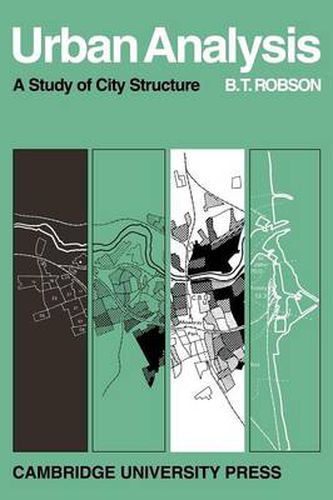
This book, originally published in 1969, will hold interest for the urban geographer. It outlines the techniques and methodology which at the time were increasingly being used by geographers working in urban studies. In doing this Dr Robson shows how disciplines which were once separate were becoming more closely interrelated when dealing with urban studies. For example, the ecologist’s interest in spatial association and areal patterns is of obvious value to the urban geographer and, in discussing this, Dr Robson explores both the relevance of older ecological models and tests the validity of what were newer approaches. The particular interest of this book lies in its analysis of the human ecology of Sunderland which at the time the book was written had a high proportion of people employed in traditional heavy manufacturing and ship-building industries. The results of this analysis are used as a basis for a study of working-class attitudes towards education in the town.
$9.00 standard shipping within Australia
FREE standard shipping within Australia for orders over $100.00
Express & International shipping calculated at checkout
Stock availability can be subject to change without notice. We recommend calling the shop or contacting our online team to check availability of low stock items. Please see our Shopping Online page for more details.
This book, originally published in 1969, will hold interest for the urban geographer. It outlines the techniques and methodology which at the time were increasingly being used by geographers working in urban studies. In doing this Dr Robson shows how disciplines which were once separate were becoming more closely interrelated when dealing with urban studies. For example, the ecologist’s interest in spatial association and areal patterns is of obvious value to the urban geographer and, in discussing this, Dr Robson explores both the relevance of older ecological models and tests the validity of what were newer approaches. The particular interest of this book lies in its analysis of the human ecology of Sunderland which at the time the book was written had a high proportion of people employed in traditional heavy manufacturing and ship-building industries. The results of this analysis are used as a basis for a study of working-class attitudes towards education in the town.
Search our extensive online catalogue.
