Readings Newsletter
Become a Readings Member to make your shopping experience even easier.
Sign in or sign up for free!
You’re not far away from qualifying for FREE standard shipping within Australia
You’ve qualified for FREE standard shipping within Australia
The cart is loading…


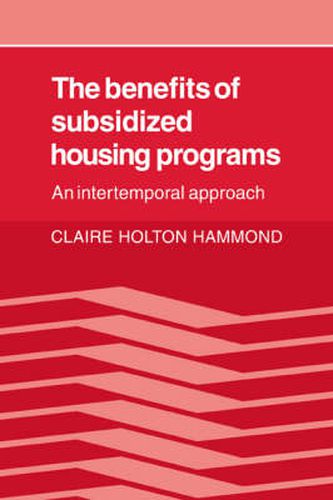
Rental housing subsidy programmes have been an important part of the American welfare system since the 1930s. The Benefits of Subsidized Housing Programs: An Intertemporal Approach is an empirical study of the distributive effects of the entire system of rental housing subsidies for lower-income households based on a national sample. Using the 1977 Annual Housing Survey, Professor Hammond has evaluated the benefits of all federal, state and local government rental housing subsidy programmes taken as a whole across the nation. Additionally, she has estimated the changes in consumption patterns resulting from these programmes and the relationship between household benefit and household income; household size; age, education, sex, and race of the head of the household; and the geographic location of the household.
$9.00 standard shipping within Australia
FREE standard shipping within Australia for orders over $100.00
Express & International shipping calculated at checkout
Stock availability can be subject to change without notice. We recommend calling the shop or contacting our online team to check availability of low stock items. Please see our Shopping Online page for more details.
Rental housing subsidy programmes have been an important part of the American welfare system since the 1930s. The Benefits of Subsidized Housing Programs: An Intertemporal Approach is an empirical study of the distributive effects of the entire system of rental housing subsidies for lower-income households based on a national sample. Using the 1977 Annual Housing Survey, Professor Hammond has evaluated the benefits of all federal, state and local government rental housing subsidy programmes taken as a whole across the nation. Additionally, she has estimated the changes in consumption patterns resulting from these programmes and the relationship between household benefit and household income; household size; age, education, sex, and race of the head of the household; and the geographic location of the household.
Search our extensive online catalogue.
