Readings Newsletter
Become a Readings Member to make your shopping experience even easier.
Sign in or sign up for free!
You’re not far away from qualifying for FREE standard shipping within Australia
You’ve qualified for FREE standard shipping within Australia
The cart is loading…


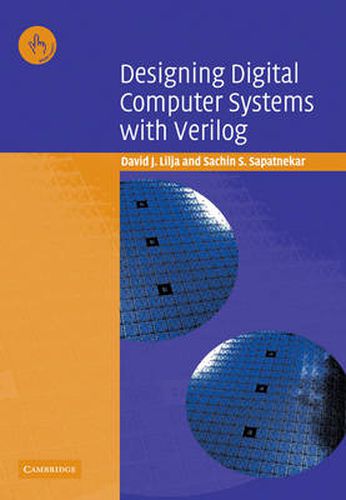
This book serves both as an introduction to computer architecture and as a guide to using a hardware description language (HDL) to design, model and simulate real digital systems. The book starts with an introduction to Verilog - the HDL chosen for the book since it is widely used in industry and straightforward to learn. Next, the instruction set architecture (ISA) for the simple VeSPA (Very Small Processor Architecture) processor is defined - this is a real working device that has been built and tested at the University of Minnesota by the authors. The VeSPA ISA is used throughout the remainder of the book to demonstrate how behavioural and structural models can be developed and intermingled in Verilog. Although Verilog is used throughout, the lessons learned will be equally applicable to other HDLs. Written for senior and graduate students, this book is also an ideal introduction to Verilog for practising engineers.
$9.00 standard shipping within Australia
FREE standard shipping within Australia for orders over $100.00
Express & International shipping calculated at checkout
Stock availability can be subject to change without notice. We recommend calling the shop or contacting our online team to check availability of low stock items. Please see our Shopping Online page for more details.
This book serves both as an introduction to computer architecture and as a guide to using a hardware description language (HDL) to design, model and simulate real digital systems. The book starts with an introduction to Verilog - the HDL chosen for the book since it is widely used in industry and straightforward to learn. Next, the instruction set architecture (ISA) for the simple VeSPA (Very Small Processor Architecture) processor is defined - this is a real working device that has been built and tested at the University of Minnesota by the authors. The VeSPA ISA is used throughout the remainder of the book to demonstrate how behavioural and structural models can be developed and intermingled in Verilog. Although Verilog is used throughout, the lessons learned will be equally applicable to other HDLs. Written for senior and graduate students, this book is also an ideal introduction to Verilog for practising engineers.
Search our extensive online catalogue.
