Readings Newsletter
Become a Readings Member to make your shopping experience even easier.
Sign in or sign up for free!
You’re not far away from qualifying for FREE standard shipping within Australia
You’ve qualified for FREE standard shipping within Australia
The cart is loading…


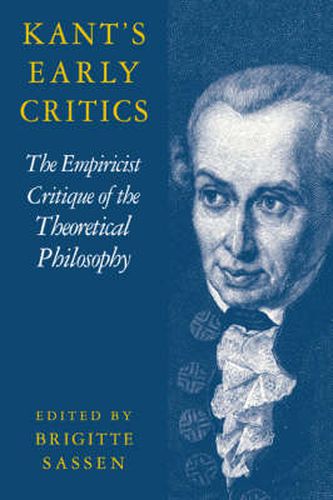
This book, first published in 2000, offers translations of the initial (1781-89) critical reactions to Kant’s philosophy. Also included is a selection of writings by Kant’s contemporaries who took on the task of defending the critical philosophy against early attacks. The first aim of this collection is to show in detail how Kant was understood and misunderstood by his contemporaries. The second aim is to reveal the sorts of arguments that Kant and his first disciples mounted in their defense of the theoretical philosophy. The third aim of the book is to contribute to an understanding of the development of Kant’s critical philosophy after its initial formulation in the Critique of Pure Reason, and in particular why Kant made the changes he did in the second edition of the work in 1787. This collection, which includes a glossary of key terms and biographical sketches of the critics on both sides of the debate, is a major addition to Kant scholarship and should be seen as a companion volume to the Cambridge Edition of the Works of Immanuel Kant.
$9.00 standard shipping within Australia
FREE standard shipping within Australia for orders over $100.00
Express & International shipping calculated at checkout
Stock availability can be subject to change without notice. We recommend calling the shop or contacting our online team to check availability of low stock items. Please see our Shopping Online page for more details.
This book, first published in 2000, offers translations of the initial (1781-89) critical reactions to Kant’s philosophy. Also included is a selection of writings by Kant’s contemporaries who took on the task of defending the critical philosophy against early attacks. The first aim of this collection is to show in detail how Kant was understood and misunderstood by his contemporaries. The second aim is to reveal the sorts of arguments that Kant and his first disciples mounted in their defense of the theoretical philosophy. The third aim of the book is to contribute to an understanding of the development of Kant’s critical philosophy after its initial formulation in the Critique of Pure Reason, and in particular why Kant made the changes he did in the second edition of the work in 1787. This collection, which includes a glossary of key terms and biographical sketches of the critics on both sides of the debate, is a major addition to Kant scholarship and should be seen as a companion volume to the Cambridge Edition of the Works of Immanuel Kant.
Search our extensive online catalogue.
