Readings Newsletter
Become a Readings Member to make your shopping experience even easier.
Sign in or sign up for free!
You’re not far away from qualifying for FREE standard shipping within Australia
You’ve qualified for FREE standard shipping within Australia
The cart is loading…


Why has the literature on Asian development not addressed the issue of money politics in Korea? How can we reconcile the view of an efficient developmental state in Korea before 1997 with reports of massive corruption and inefficiency in that same country in 1998 and 1999? Politics is central to the answer. In this book the author makes two arguments. First, both Korea and the Philippines experienced significant corruption throughout the post-independence era. Second, political - not economic - considerations dominated policy making in both countries. Focusing on the exchange of favors for bribes between state and business, the author argues that politics drove policy choices, that bureaucrats were not autonomous from political interference in setting policy, and that business and political elites wrestled with each other over who would reap the rents to be had. Even in Korea, corruption was far greater than the conventional wisdom allows.
$9.00 standard shipping within Australia
FREE standard shipping within Australia for orders over $100.00
Express & International shipping calculated at checkout
Stock availability can be subject to change without notice. We recommend calling the shop or contacting our online team to check availability of low stock items. Please see our Shopping Online page for more details.
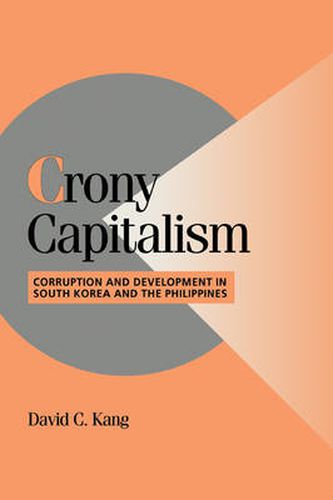
Why has the literature on Asian development not addressed the issue of money politics in Korea? How can we reconcile the view of an efficient developmental state in Korea before 1997 with reports of massive corruption and inefficiency in that same country in 1998 and 1999? Politics is central to the answer. In this book the author makes two arguments. First, both Korea and the Philippines experienced significant corruption throughout the post-independence era. Second, political - not economic - considerations dominated policy making in both countries. Focusing on the exchange of favors for bribes between state and business, the author argues that politics drove policy choices, that bureaucrats were not autonomous from political interference in setting policy, and that business and political elites wrestled with each other over who would reap the rents to be had. Even in Korea, corruption was far greater than the conventional wisdom allows.
Search our extensive online catalogue.
