Readings Newsletter
Become a Readings Member to make your shopping experience even easier.
Sign in or sign up for free!
You’re not far away from qualifying for FREE standard shipping within Australia
You’ve qualified for FREE standard shipping within Australia
The cart is loading…


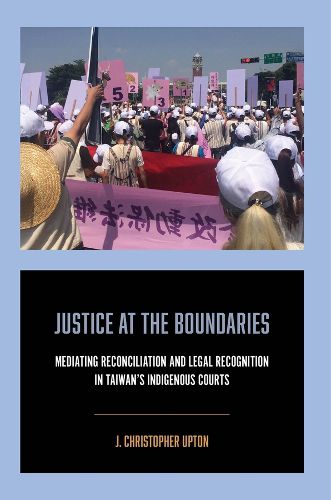
Justice at the Boundaries offers a powerful ethnographic account of the transformative potential and structural limitations of Taiwan's system of ad hoc Chambers of Indigenous Courts. Drawing on immersive fieldwork in courtrooms and Indigenous communities, J. Christopher Upton examines how judges, Indigenous litigants, and cultural brokers negotiate contested terrains of law, identity, and sovereignty in a legal system shaped by ongoing processes of colonialism and aspirations of multiculturalism. From invocations of Indigenous laws to appeals to international human rights norms, the book reveals how courtroom encounters become sites of cultural negotiation, resistance, and possibility. Framing Taiwan's Indigenous courts as "boundary institutions," Upton shows how institutions designed to bridge Indigenous and non-Indigenous worlds both challenge and reproduce entrenched hierarchies and power dynamics. The book brings fresh methodological and conceptual tools to the study of legal pluralism, Indigenous courts, Indigenous peoples' rights, and the complex politics of Indigenous recognition in the Asia-Pacific region and beyond.
$9.00 standard shipping within Australia
FREE standard shipping within Australia for orders over $100.00
Express & International shipping calculated at checkout
Stock availability can be subject to change without notice. We recommend calling the shop or contacting our online team to check availability of low stock items. Please see our Shopping Online page for more details.
Justice at the Boundaries offers a powerful ethnographic account of the transformative potential and structural limitations of Taiwan's system of ad hoc Chambers of Indigenous Courts. Drawing on immersive fieldwork in courtrooms and Indigenous communities, J. Christopher Upton examines how judges, Indigenous litigants, and cultural brokers negotiate contested terrains of law, identity, and sovereignty in a legal system shaped by ongoing processes of colonialism and aspirations of multiculturalism. From invocations of Indigenous laws to appeals to international human rights norms, the book reveals how courtroom encounters become sites of cultural negotiation, resistance, and possibility. Framing Taiwan's Indigenous courts as "boundary institutions," Upton shows how institutions designed to bridge Indigenous and non-Indigenous worlds both challenge and reproduce entrenched hierarchies and power dynamics. The book brings fresh methodological and conceptual tools to the study of legal pluralism, Indigenous courts, Indigenous peoples' rights, and the complex politics of Indigenous recognition in the Asia-Pacific region and beyond.
Search our extensive online catalogue.
