Readings Newsletter
Become a Readings Member to make your shopping experience even easier.
Sign in or sign up for free!
You’re not far away from qualifying for FREE standard shipping within Australia
You’ve qualified for FREE standard shipping within Australia
The cart is loading…


A free ebook version of this title is available through Luminos, University of California Press's Open Access publishing program. Visit www.luminosoa.org to learn more.
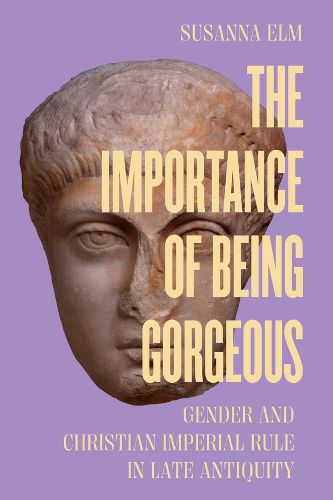
In this book, Susanna Elm radically changes our understanding of imperial rule in the later Roman Empire. As she shows, the so-called eastern decadence of the Emperor Theodosius and his successors was in fact a calculated revolution in masculinity and the representation of imperial power. Here, the emperor's hard yet soft, mature yet youthfully gorgeous beauty was central. Because the Theodosian emperors were divine-gods one could see-so was their beauty: their manliness was the face and body of God. The emperors' gorgeousness, their sparkling regalia, how they wished their bodies to be seen by their elite subjects-who authored the texts on which Elm's analysis is based-were as important as laws, taxes, and armies. Their vir-ness strategically deployed male same-sex erotic desire to enhance the unity of the realm in times of tension, incorporate the signifying potency of child emperors, and create a flexible yet stable model of Christian sovereignty.
$9.00 standard shipping within Australia
FREE standard shipping within Australia for orders over $100.00
Express & International shipping calculated at checkout
Stock availability can be subject to change without notice. We recommend calling the shop or contacting our online team to check availability of low stock items. Please see our Shopping Online page for more details.
A free ebook version of this title is available through Luminos, University of California Press's Open Access publishing program. Visit www.luminosoa.org to learn more.
In this book, Susanna Elm radically changes our understanding of imperial rule in the later Roman Empire. As she shows, the so-called eastern decadence of the Emperor Theodosius and his successors was in fact a calculated revolution in masculinity and the representation of imperial power. Here, the emperor's hard yet soft, mature yet youthfully gorgeous beauty was central. Because the Theodosian emperors were divine-gods one could see-so was their beauty: their manliness was the face and body of God. The emperors' gorgeousness, their sparkling regalia, how they wished their bodies to be seen by their elite subjects-who authored the texts on which Elm's analysis is based-were as important as laws, taxes, and armies. Their vir-ness strategically deployed male same-sex erotic desire to enhance the unity of the realm in times of tension, incorporate the signifying potency of child emperors, and create a flexible yet stable model of Christian sovereignty.
Search our extensive online catalogue.
