Readings Newsletter
Become a Readings Member to make your shopping experience even easier.
Sign in or sign up for free!
You’re not far away from qualifying for FREE standard shipping within Australia
You’ve qualified for FREE standard shipping within Australia
The cart is loading…


A free ebook version of this title is available through Luminos, University of California Press's Open Access publishing program. Visit www.luminosoa.org to learn more.
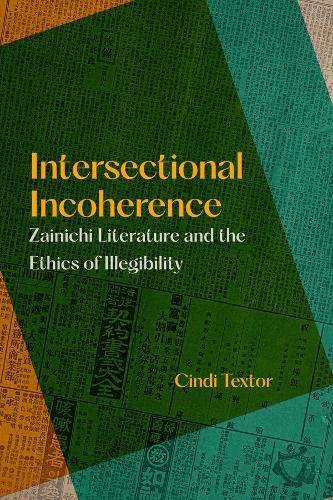
Intersectional Incoherence stages an encounter between the critical discourse on intersectionality and texts produced by Korean subjects of the Japanese empire and their postwar descendants in Japan, known as Zainichi Koreans. Arguing for intersectionality as a reading method rather than strictly a tool of social analysis, Cindi Textor reads moments of illegibility and incoherent language in these texts as a product of the pressures on Zainichi Koreans and their literature to represent both Korean difference from and affinity with Japan. Rejecting linguistic norms and representational imperatives of identity categories, Textor instead demands that the reader grapple with the silent, absent, illegible, or unintelligible. Engaging with the incoherent, she argues, allows for a more ethical approach to texts, subjects, and communities that resist representation within existing paradigms.
$9.00 standard shipping within Australia
FREE standard shipping within Australia for orders over $100.00
Express & International shipping calculated at checkout
Stock availability can be subject to change without notice. We recommend calling the shop or contacting our online team to check availability of low stock items. Please see our Shopping Online page for more details.
A free ebook version of this title is available through Luminos, University of California Press's Open Access publishing program. Visit www.luminosoa.org to learn more.
Intersectional Incoherence stages an encounter between the critical discourse on intersectionality and texts produced by Korean subjects of the Japanese empire and their postwar descendants in Japan, known as Zainichi Koreans. Arguing for intersectionality as a reading method rather than strictly a tool of social analysis, Cindi Textor reads moments of illegibility and incoherent language in these texts as a product of the pressures on Zainichi Koreans and their literature to represent both Korean difference from and affinity with Japan. Rejecting linguistic norms and representational imperatives of identity categories, Textor instead demands that the reader grapple with the silent, absent, illegible, or unintelligible. Engaging with the incoherent, she argues, allows for a more ethical approach to texts, subjects, and communities that resist representation within existing paradigms.
Search our extensive online catalogue.
