Readings Newsletter
Become a Readings Member to make your shopping experience even easier.
Sign in or sign up for free!
You’re not far away from qualifying for FREE standard shipping within Australia
You’ve qualified for FREE standard shipping within Australia
The cart is loading…


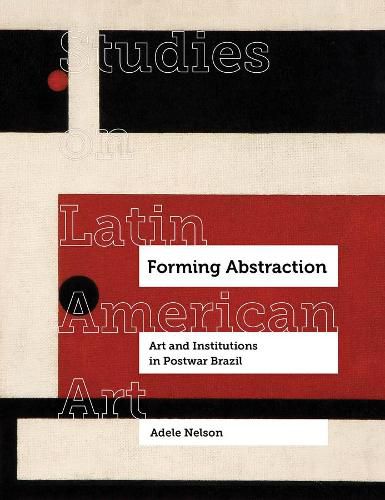
Art produced outside hegemonic centers is often seen as a form of derivation or relegated to a provisional status. Forming Abstraction turns this narrative on its head. In the first book-length study of Brazilian art and culture following World War II, Adele Nelson highlights the importance of exhibitionary and pedagogical institutions in the development of abstract art in Brazil. By focusing on the formation of the Sao Paulo Biennial in 1951; the early activities of artists Geraldo de Barros, Lygia Clark, Waldemar Cordeiro, Helio Oiticica, Lygia Pape, and Ivan Serpa; and the ideas of critics like Mario Pedrosa, Nelson illuminates the complex, strategic processes of citation and adaption of both local and international forms. The book ultimately demonstrates that postwar Brazilian art institutions and abstract artistic groups-and their exhibitions of abstract art in particular-served as crucial loci for the articulation of societal identities in a newly democratic nation at the onset of the Cold War.
$9.00 standard shipping within Australia
FREE standard shipping within Australia for orders over $100.00
Express & International shipping calculated at checkout
Stock availability can be subject to change without notice. We recommend calling the shop or contacting our online team to check availability of low stock items. Please see our Shopping Online page for more details.
Art produced outside hegemonic centers is often seen as a form of derivation or relegated to a provisional status. Forming Abstraction turns this narrative on its head. In the first book-length study of Brazilian art and culture following World War II, Adele Nelson highlights the importance of exhibitionary and pedagogical institutions in the development of abstract art in Brazil. By focusing on the formation of the Sao Paulo Biennial in 1951; the early activities of artists Geraldo de Barros, Lygia Clark, Waldemar Cordeiro, Helio Oiticica, Lygia Pape, and Ivan Serpa; and the ideas of critics like Mario Pedrosa, Nelson illuminates the complex, strategic processes of citation and adaption of both local and international forms. The book ultimately demonstrates that postwar Brazilian art institutions and abstract artistic groups-and their exhibitions of abstract art in particular-served as crucial loci for the articulation of societal identities in a newly democratic nation at the onset of the Cold War.
Search our extensive online catalogue.
