Readings Newsletter
Become a Readings Member to make your shopping experience even easier.
Sign in or sign up for free!
You’re not far away from qualifying for FREE standard shipping within Australia
You’ve qualified for FREE standard shipping within Australia
The cart is loading…


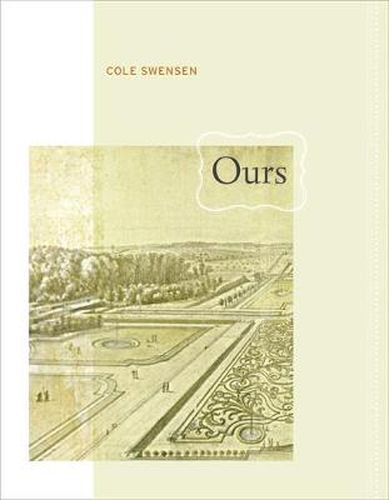
These poems are about gardens, particularly the seventeenth-century French baroque gardens designed by the father of the form, Andre Le Notre. While the poems focus on such examples as Versailles, which Le Notre created for Louis XIV, they also explore the garden as metaphor. Using the imagery of the garden, Cole Swensen considers everything from human society to the formal structure of poetry. She looks in particular at the concept of public versus private property, asking who actually owns a garden? A gentle irony accompanies the question because in French, the phrase le notre means ours. Whereas all of Le Notre’s gardens were designed and built for the aristocracy, today most are public parks. Swensen probes the two senses of le notre to discover where they intersect, overlap, or blur.
$9.00 standard shipping within Australia
FREE standard shipping within Australia for orders over $100.00
Express & International shipping calculated at checkout
Stock availability can be subject to change without notice. We recommend calling the shop or contacting our online team to check availability of low stock items. Please see our Shopping Online page for more details.
These poems are about gardens, particularly the seventeenth-century French baroque gardens designed by the father of the form, Andre Le Notre. While the poems focus on such examples as Versailles, which Le Notre created for Louis XIV, they also explore the garden as metaphor. Using the imagery of the garden, Cole Swensen considers everything from human society to the formal structure of poetry. She looks in particular at the concept of public versus private property, asking who actually owns a garden? A gentle irony accompanies the question because in French, the phrase le notre means ours. Whereas all of Le Notre’s gardens were designed and built for the aristocracy, today most are public parks. Swensen probes the two senses of le notre to discover where they intersect, overlap, or blur.
Search our extensive online catalogue.
