Readings Newsletter
Become a Readings Member to make your shopping experience even easier.
Sign in or sign up for free!
You’re not far away from qualifying for FREE standard shipping within Australia
You’ve qualified for FREE standard shipping within Australia
The cart is loading…


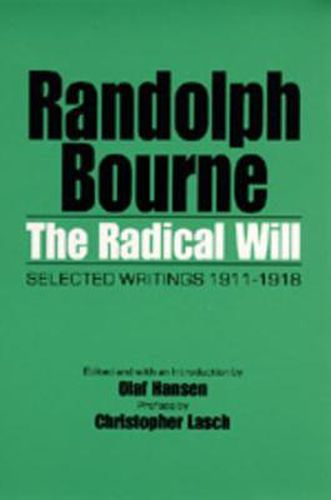
Randolph Bourne was only thirty-two when he died in 1918, but he left a legacy of astonishingly mature and incisive writings on politics, literature, and culture, which were of enormous influence in shaping the American intellectual climate of the 1920s and 1930s. This definitive collection, back in print at last, includes such noted essays as The War and the Intellectuals,
The Fragment of the State,
The Development of Public Opinion, and John Dewey’s Philosophy. Bourne’s critique of militarism and advocacy of cultural pluralism are enduring contributions to social and political thought, sure to have an equally strong impact in our own time. In their introduction and preface, Olaf Hansen and Christopher Lasch provide biographical and historical context for Bourne’s work.
$9.00 standard shipping within Australia
FREE standard shipping within Australia for orders over $100.00
Express & International shipping calculated at checkout
Stock availability can be subject to change without notice. We recommend calling the shop or contacting our online team to check availability of low stock items. Please see our Shopping Online page for more details.
Randolph Bourne was only thirty-two when he died in 1918, but he left a legacy of astonishingly mature and incisive writings on politics, literature, and culture, which were of enormous influence in shaping the American intellectual climate of the 1920s and 1930s. This definitive collection, back in print at last, includes such noted essays as The War and the Intellectuals,
The Fragment of the State,
The Development of Public Opinion, and John Dewey’s Philosophy. Bourne’s critique of militarism and advocacy of cultural pluralism are enduring contributions to social and political thought, sure to have an equally strong impact in our own time. In their introduction and preface, Olaf Hansen and Christopher Lasch provide biographical and historical context for Bourne’s work.
Search our extensive online catalogue.
