Readings Newsletter
Become a Readings Member to make your shopping experience even easier.
Sign in or sign up for free!
You’re not far away from qualifying for FREE standard shipping within Australia
You’ve qualified for FREE standard shipping within Australia
The cart is loading…


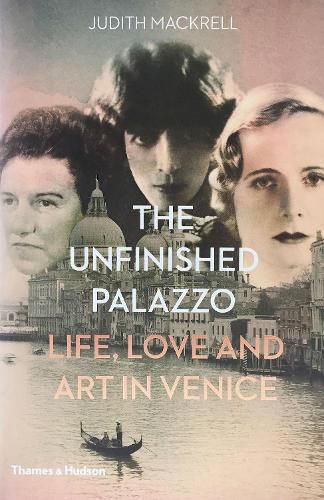
Commissioned in 1750, the Palazzo Venier was planned as a testimony to the power and wealth of a great Venetian family, but the fortunes of the Veniers waned midconstruction and the project was abandoned. Empty, unfinished, and decaying, the building was considered an eyesore until the early twentieth century when it attracted and inspired three women at key moments in their lives: Luisa Casati, Doris Castlerosse, and Peggy Guggenheim.
Luisa Casati turned her home into an aesthete’s fantasy where she hosted parties as extravagant and decadent as Renaissance court operas, spending small fortunes on her own costumes in her quest to become a “living work of art” and muse. Doris Castlerosse strove to make her mark in London and Venice during the glamorous, hedonistic interwar years, hosting film stars and royalty at glittering parties. In the postwar years, Peggy Gugenheim turned the Palazzo into a model of modernist simplicity that served as a home for her exquisite collection of modern art that today draws tourists and art lovers from around the world. Each vivid life story is accompanied by previously unseen materials from family archives, weaving an intricate history of these legendary art world eccentrics.
$9.00 standard shipping within Australia
FREE standard shipping within Australia for orders over $100.00
Express & International shipping calculated at checkout
Stock availability can be subject to change without notice. We recommend calling the shop or contacting our online team to check availability of low stock items. Please see our Shopping Online page for more details.
Commissioned in 1750, the Palazzo Venier was planned as a testimony to the power and wealth of a great Venetian family, but the fortunes of the Veniers waned midconstruction and the project was abandoned. Empty, unfinished, and decaying, the building was considered an eyesore until the early twentieth century when it attracted and inspired three women at key moments in their lives: Luisa Casati, Doris Castlerosse, and Peggy Guggenheim.
Luisa Casati turned her home into an aesthete’s fantasy where she hosted parties as extravagant and decadent as Renaissance court operas, spending small fortunes on her own costumes in her quest to become a “living work of art” and muse. Doris Castlerosse strove to make her mark in London and Venice during the glamorous, hedonistic interwar years, hosting film stars and royalty at glittering parties. In the postwar years, Peggy Gugenheim turned the Palazzo into a model of modernist simplicity that served as a home for her exquisite collection of modern art that today draws tourists and art lovers from around the world. Each vivid life story is accompanied by previously unseen materials from family archives, weaving an intricate history of these legendary art world eccentrics.
Search our extensive online catalogue.
