Readings Newsletter
Become a Readings Member to make your shopping experience even easier.
Sign in or sign up for free!
You’re not far away from qualifying for FREE standard shipping within Australia
You’ve qualified for FREE standard shipping within Australia
The cart is loading…


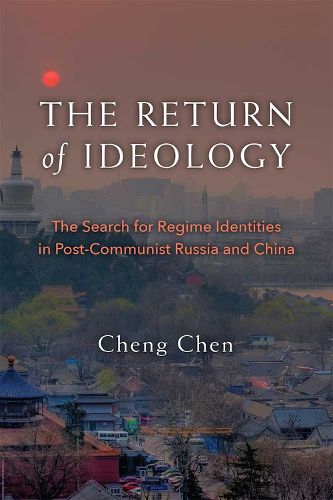
As a nation makes the transition from communism to democracy oranother form of authoritarianism, its regime must construct not onlynew political institutions, but also a new political ideology that canguide policy and provide a sense of mission. The new ideology is crucialfor legitimacy at home and abroad, as well as the regime’s long-termviability. In The Return of Ideology, Cheng Chen compares postcommunistregimes, with a focus on Russia under Putin and post-DengChina, investigating the factors that affect the success of an ideology-buildingproject and identifies the implications for international affairs.
Successful ideology-building requires two necessary-but not sufficient-conditions. The regime must establish a coherent ideological repertoirethat takes into account the nation’s ideological heritage and fresh surgesof nationalism. Also, the regime must attract and maintain a strongcommitment to the emerging ideology among the political elite.
Drawing on rich primary sources, including interviews, surveys, politicalspeeches, writings of political leaders, and a variety of publications, Chenidentifies the major obstacles to ideology-building in modern Russiaand China and assesses their respective long-term prospects. Whereascreating a new regime ideology has been a protracted and difficultprocess in China, it has been even more so in Russia. The ability to forgean ideology is not merely a domestic concern for these two nations, but amatter of international import as these two great powers move to assertand extend their influence in the world.
$9.00 standard shipping within Australia
FREE standard shipping within Australia for orders over $100.00
Express & International shipping calculated at checkout
Stock availability can be subject to change without notice. We recommend calling the shop or contacting our online team to check availability of low stock items. Please see our Shopping Online page for more details.
As a nation makes the transition from communism to democracy oranother form of authoritarianism, its regime must construct not onlynew political institutions, but also a new political ideology that canguide policy and provide a sense of mission. The new ideology is crucialfor legitimacy at home and abroad, as well as the regime’s long-termviability. In The Return of Ideology, Cheng Chen compares postcommunistregimes, with a focus on Russia under Putin and post-DengChina, investigating the factors that affect the success of an ideology-buildingproject and identifies the implications for international affairs.
Successful ideology-building requires two necessary-but not sufficient-conditions. The regime must establish a coherent ideological repertoirethat takes into account the nation’s ideological heritage and fresh surgesof nationalism. Also, the regime must attract and maintain a strongcommitment to the emerging ideology among the political elite.
Drawing on rich primary sources, including interviews, surveys, politicalspeeches, writings of political leaders, and a variety of publications, Chenidentifies the major obstacles to ideology-building in modern Russiaand China and assesses their respective long-term prospects. Whereascreating a new regime ideology has been a protracted and difficultprocess in China, it has been even more so in Russia. The ability to forgean ideology is not merely a domestic concern for these two nations, but amatter of international import as these two great powers move to assertand extend their influence in the world.
Search our extensive online catalogue.
