Readings Newsletter
Become a Readings Member to make your shopping experience even easier.
Sign in or sign up for free!
You’re not far away from qualifying for FREE standard shipping within Australia
You’ve qualified for FREE standard shipping within Australia
The cart is loading…


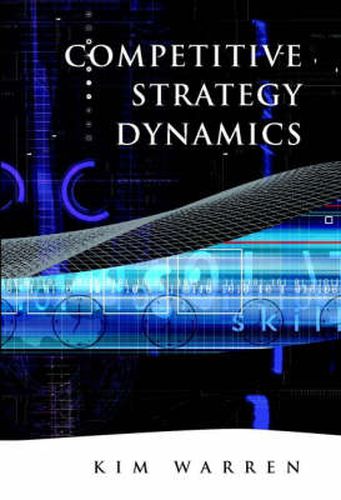
This book offers a practical, fact-based approach to explain how enterprises deliver performance over time. Rigorous methods explain how to quantify the growth, decline and interdependence within the organisation’s resources and capabilities as well as the continuous interactions with competitors and other external factors. These methods create clear and practical pictures of the strategic architecture driving earnings and other performance outcomes, not just for commercial firms, but for non-profit cases too. Management is then well-equipped to answer three crucial questions in their strategy development : why has the business performed as it has to date? where is performance headed in the future if we carry on as now? and how can we alter this future for the better? The book provides the basis for an entire course on the time-based perspective on competitive strategy, connecting strongly to established static frameworks. Alternatively it offers a vital missing component for existing courses in strategy and general management, as well as a key reference text for professionals in corporate development, consulting and business analysis.
$9.00 standard shipping within Australia
FREE standard shipping within Australia for orders over $100.00
Express & International shipping calculated at checkout
Stock availability can be subject to change without notice. We recommend calling the shop or contacting our online team to check availability of low stock items. Please see our Shopping Online page for more details.
This book offers a practical, fact-based approach to explain how enterprises deliver performance over time. Rigorous methods explain how to quantify the growth, decline and interdependence within the organisation’s resources and capabilities as well as the continuous interactions with competitors and other external factors. These methods create clear and practical pictures of the strategic architecture driving earnings and other performance outcomes, not just for commercial firms, but for non-profit cases too. Management is then well-equipped to answer three crucial questions in their strategy development : why has the business performed as it has to date? where is performance headed in the future if we carry on as now? and how can we alter this future for the better? The book provides the basis for an entire course on the time-based perspective on competitive strategy, connecting strongly to established static frameworks. Alternatively it offers a vital missing component for existing courses in strategy and general management, as well as a key reference text for professionals in corporate development, consulting and business analysis.
Search our extensive online catalogue.
