Readings Newsletter
Become a Readings Member to make your shopping experience even easier.
Sign in or sign up for free!
You’re not far away from qualifying for FREE standard shipping within Australia
You’ve qualified for FREE standard shipping within Australia
The cart is loading…


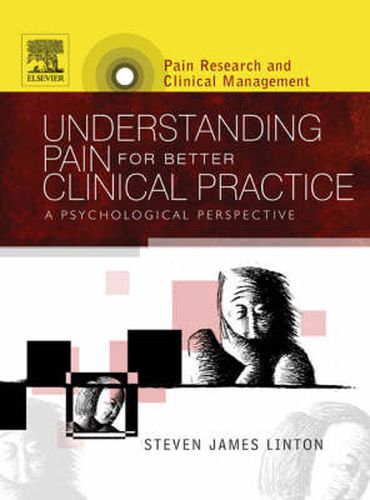
PART I: THE PSYCHOLOGY OF PAIN PERCEPTION AND BEHAVIOR Chapter 1 The need to understand the psychology of pain Chapter 2 Models of pain pe rception Chapter 3 The biological-psychological interface: Pain perce ption Chapter 4 Attending to pain stimuli: Vigilance and Distraction< br>Chapter 5 Emotions and the experience of pain Chapter 6 Interpreti ng pain signals: Cognitions Chapter 7 Learning to cope: Behavior in p ain and health Chapter 8 An integrated model PART II: IMPLICATIONS FOR CLINICAL PRACTICE Chapter 9 Why does chronic pain develop? Ch apter 10 Communicating with patients Chapter 11 Managing the first vi sit Chapter 12 Early identification of ‘at risk’ patients: screening< br>Chapter 13 Early intervention Chapter 14 The way forward
Appendix Session manual for therapist’s: Cognitive-behavioral early inte rvention for groups rvention for groups
$9.00 standard shipping within Australia
FREE standard shipping within Australia for orders over $100.00
Express & International shipping calculated at checkout
Stock availability can be subject to change without notice. We recommend calling the shop or contacting our online team to check availability of low stock items. Please see our Shopping Online page for more details.
PART I: THE PSYCHOLOGY OF PAIN PERCEPTION AND BEHAVIOR Chapter 1 The need to understand the psychology of pain Chapter 2 Models of pain pe rception Chapter 3 The biological-psychological interface: Pain perce ption Chapter 4 Attending to pain stimuli: Vigilance and Distraction< br>Chapter 5 Emotions and the experience of pain Chapter 6 Interpreti ng pain signals: Cognitions Chapter 7 Learning to cope: Behavior in p ain and health Chapter 8 An integrated model PART II: IMPLICATIONS FOR CLINICAL PRACTICE Chapter 9 Why does chronic pain develop? Ch apter 10 Communicating with patients Chapter 11 Managing the first vi sit Chapter 12 Early identification of ‘at risk’ patients: screening< br>Chapter 13 Early intervention Chapter 14 The way forward
Appendix Session manual for therapist’s: Cognitive-behavioral early inte rvention for groups rvention for groups
Search our extensive online catalogue.
