Readings Newsletter
Become a Readings Member to make your shopping experience even easier.
Sign in or sign up for free!
You’re not far away from qualifying for FREE standard shipping within Australia
You’ve qualified for FREE standard shipping within Australia
The cart is loading…


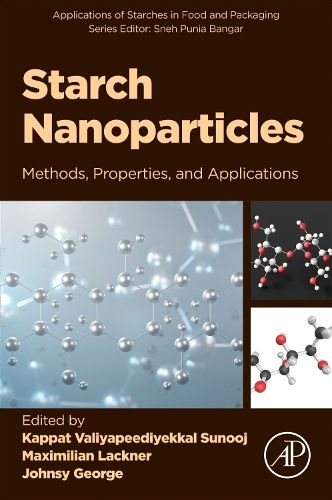
Starch Nanoparticles: Methods, Properties, and Applications, a volume in the "Applications of Starches in Food and Packaging" Series, is a comprehensive exploration of the emerging field of nanoparticles, focusing on their production methods, unique properties, and various functionalities. This book delves into starch nanoparticles (SNPs), their general preparation methods, characteristics, and their applications, especially in food systems, such as Pickering emulsion, bioplastic filler, antimicrobial agents, fat replacements, and encapsulating agents. The chapters cover starch nanoparticles' physical, chemical, and structural properties, offering readers insights into their behavior and potential applications. The interdisciplinary nature of the book may appeal to readers from various fields. Researchers and professionals in nanotechnology, food science, food packaging, materials science, and biochemistry can benefit from the cross-disciplinary insights provided.
$9.00 standard shipping within Australia
FREE standard shipping within Australia for orders over $100.00
Express & International shipping calculated at checkout
Stock availability can be subject to change without notice. We recommend calling the shop or contacting our online team to check availability of low stock items. Please see our Shopping Online page for more details.
Starch Nanoparticles: Methods, Properties, and Applications, a volume in the "Applications of Starches in Food and Packaging" Series, is a comprehensive exploration of the emerging field of nanoparticles, focusing on their production methods, unique properties, and various functionalities. This book delves into starch nanoparticles (SNPs), their general preparation methods, characteristics, and their applications, especially in food systems, such as Pickering emulsion, bioplastic filler, antimicrobial agents, fat replacements, and encapsulating agents. The chapters cover starch nanoparticles' physical, chemical, and structural properties, offering readers insights into their behavior and potential applications. The interdisciplinary nature of the book may appeal to readers from various fields. Researchers and professionals in nanotechnology, food science, food packaging, materials science, and biochemistry can benefit from the cross-disciplinary insights provided.
Search our extensive online catalogue.
