Readings Newsletter
Become a Readings Member to make your shopping experience even easier.
Sign in or sign up for free!
You’re not far away from qualifying for FREE standard shipping within Australia
You’ve qualified for FREE standard shipping within Australia
The cart is loading…


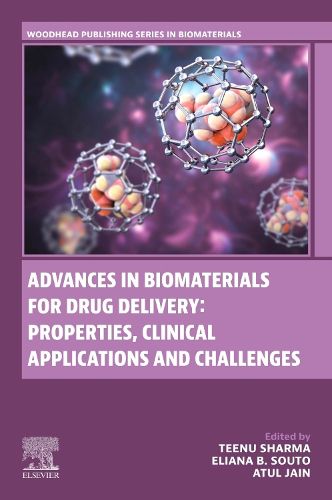
Advances in Biomaterials for Drug Delivery: Properties, Clinical Applications and Challenges comprehensively reviews various biomaterials and biomaterial-derived carrier systems, with a specific focus on their application in drug delivery, and their clinical and regulatory challenges. A broad range of biomaterials for drug delivery are covered, including natural biomaterials, inorganic biomaterials, synthetic biomaterials, 3-D/4-D printed biomaterials, metal-based biomaterials, and polymeric and lipidic biomaterials. Various drug delivery approaches are detailed, from pulmonary and transdermal through to oral and systemic. Key to translational success of these novel platforms are the regulatory and clinical aspects of biomaterials development and application; these aspects are covered in each chapter, providing vital insight required to make informed decisions. Advances in Biomaterials for Drug Delivery: Properties, Clinical Applications and Challenges is an interesting resource for researchers and academics in the fields in biomaterials, materials science, polymer science, and pharmaceutical science, as well as clinicians and R&D groups with an interest in the development of novel biomaterials for drug delivery.
$9.00 standard shipping within Australia
FREE standard shipping within Australia for orders over $100.00
Express & International shipping calculated at checkout
Stock availability can be subject to change without notice. We recommend calling the shop or contacting our online team to check availability of low stock items. Please see our Shopping Online page for more details.
Advances in Biomaterials for Drug Delivery: Properties, Clinical Applications and Challenges comprehensively reviews various biomaterials and biomaterial-derived carrier systems, with a specific focus on their application in drug delivery, and their clinical and regulatory challenges. A broad range of biomaterials for drug delivery are covered, including natural biomaterials, inorganic biomaterials, synthetic biomaterials, 3-D/4-D printed biomaterials, metal-based biomaterials, and polymeric and lipidic biomaterials. Various drug delivery approaches are detailed, from pulmonary and transdermal through to oral and systemic. Key to translational success of these novel platforms are the regulatory and clinical aspects of biomaterials development and application; these aspects are covered in each chapter, providing vital insight required to make informed decisions. Advances in Biomaterials for Drug Delivery: Properties, Clinical Applications and Challenges is an interesting resource for researchers and academics in the fields in biomaterials, materials science, polymer science, and pharmaceutical science, as well as clinicians and R&D groups with an interest in the development of novel biomaterials for drug delivery.
Search our extensive online catalogue.
