Readings Newsletter
Become a Readings Member to make your shopping experience even easier.
Sign in or sign up for free!
You’re not far away from qualifying for FREE standard shipping within Australia
You’ve qualified for FREE standard shipping within Australia
The cart is loading…


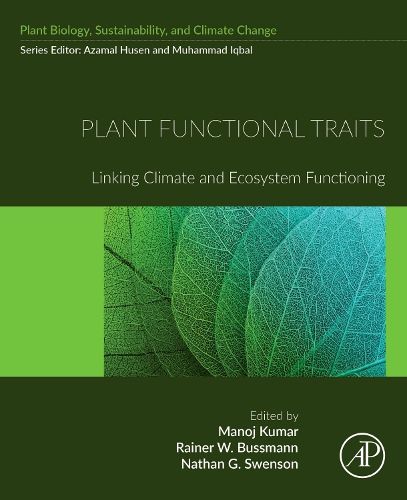
Plant Function Traits: Linking Climate and Ecosystem Functioning, part of the Plant Biology, Sustainability and Climate Change series, presents a wholistic understanding of Plant Functional Traits. As global climate change advances, natural resources are facing increasing survival challenges, hence this book directly addresses that need, exploring the morphological, physiological, and phenological properties of a plant that can be used as a proxy to understand plant environment interactions. Users will find great illustrations throughout individual chapters, along with case studies that demonstrate applications of functional traits in classifying vegetation of a region into distinct type groups as Plant Functional Types (PFTs).
Additional information includes applications in the development of new generation of Dynamic Global Vegetation Model (DGVM) and an understanding of the response of vegetation to changing environments.
$9.00 standard shipping within Australia
FREE standard shipping within Australia for orders over $100.00
Express & International shipping calculated at checkout
Stock availability can be subject to change without notice. We recommend calling the shop or contacting our online team to check availability of low stock items. Please see our Shopping Online page for more details.
Plant Function Traits: Linking Climate and Ecosystem Functioning, part of the Plant Biology, Sustainability and Climate Change series, presents a wholistic understanding of Plant Functional Traits. As global climate change advances, natural resources are facing increasing survival challenges, hence this book directly addresses that need, exploring the morphological, physiological, and phenological properties of a plant that can be used as a proxy to understand plant environment interactions. Users will find great illustrations throughout individual chapters, along with case studies that demonstrate applications of functional traits in classifying vegetation of a region into distinct type groups as Plant Functional Types (PFTs).
Additional information includes applications in the development of new generation of Dynamic Global Vegetation Model (DGVM) and an understanding of the response of vegetation to changing environments.