Readings Newsletter
Become a Readings Member to make your shopping experience even easier.
Sign in or sign up for free!
You’re not far away from qualifying for FREE standard shipping within Australia
You’ve qualified for FREE standard shipping within Australia
The cart is loading…


This ethnographic study examines the transnational relations among feminist movements at the end of the twentieth century, exploring two differently situated women’s organizations in the Northeast Brazilian state of Pernambuco. The conventional narrative of globalization tells the story of inexorable forces beyond the capacity of individuals to mute or transcend. But this study tells a different story, one of social actors purposefully weaving cross-border relationships. From this vantage point, global social forces are not immaculately conceived. Instead, they are constituted by human actors with their own interests and identities, located in particular social contexts. Making Transnational Feminism takes what some have called global civil society as its object, moving beyond both dire predictions and euphoric celebrations to understand how transnational political relationships are constructed and sustained across social and geographical divides. It also provides a compelling case study for use in advanced undergraduate and graduate courses in globalization, gender studies, and social movements.
$9.00 standard shipping within Australia
FREE standard shipping within Australia for orders over $100.00
Express & International shipping calculated at checkout
Stock availability can be subject to change without notice. We recommend calling the shop or contacting our online team to check availability of low stock items. Please see our Shopping Online page for more details.
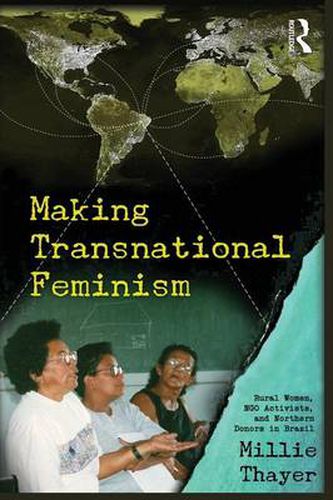
This ethnographic study examines the transnational relations among feminist movements at the end of the twentieth century, exploring two differently situated women’s organizations in the Northeast Brazilian state of Pernambuco. The conventional narrative of globalization tells the story of inexorable forces beyond the capacity of individuals to mute or transcend. But this study tells a different story, one of social actors purposefully weaving cross-border relationships. From this vantage point, global social forces are not immaculately conceived. Instead, they are constituted by human actors with their own interests and identities, located in particular social contexts. Making Transnational Feminism takes what some have called global civil society as its object, moving beyond both dire predictions and euphoric celebrations to understand how transnational political relationships are constructed and sustained across social and geographical divides. It also provides a compelling case study for use in advanced undergraduate and graduate courses in globalization, gender studies, and social movements.
Search our extensive online catalogue.
