Readings Newsletter
Become a Readings Member to make your shopping experience even easier.
Sign in or sign up for free!
You’re not far away from qualifying for FREE standard shipping within Australia
You’ve qualified for FREE standard shipping within Australia
The cart is loading…


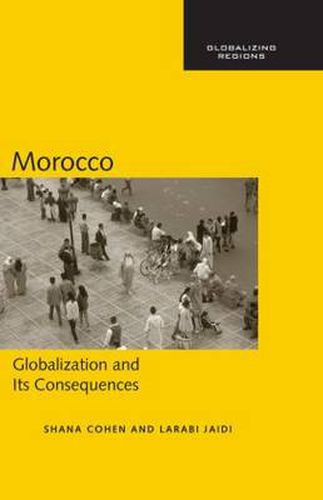
Cohen and Jaidi trace the development of contemporary Morocco in the Islamic world of North Africa, which is currently at the forefront of the clash between Western-style development and the politicized Islam that now pervades the Arab world.
By applying globalization theory to detailed accounts of everyday life in an Arab society, the book is uniquely suited to students. Morocco in particular is a good place to look at this extremely important confrontation. It is among the most liberalized Islamic states, yet it is also in the midst of a revival of politicized Islam, which has its own globalizing agenda. The authors detail how this clash pervades Moroccan culture and society, and what it can tell us about the effects of globalization on the Arab world. Morocco is extremely close to the West in terms of physical proximity, and it is a favoured spot for Western tourists. Yet its closest neighbours in social terms are Algeria, Libya, and Tunisia, all of which have directly experienced the effects of politicized Islam in the last quarter century.
$9.00 standard shipping within Australia
FREE standard shipping within Australia for orders over $100.00
Express & International shipping calculated at checkout
Stock availability can be subject to change without notice. We recommend calling the shop or contacting our online team to check availability of low stock items. Please see our Shopping Online page for more details.
Cohen and Jaidi trace the development of contemporary Morocco in the Islamic world of North Africa, which is currently at the forefront of the clash between Western-style development and the politicized Islam that now pervades the Arab world.
By applying globalization theory to detailed accounts of everyday life in an Arab society, the book is uniquely suited to students. Morocco in particular is a good place to look at this extremely important confrontation. It is among the most liberalized Islamic states, yet it is also in the midst of a revival of politicized Islam, which has its own globalizing agenda. The authors detail how this clash pervades Moroccan culture and society, and what it can tell us about the effects of globalization on the Arab world. Morocco is extremely close to the West in terms of physical proximity, and it is a favoured spot for Western tourists. Yet its closest neighbours in social terms are Algeria, Libya, and Tunisia, all of which have directly experienced the effects of politicized Islam in the last quarter century.
Search our extensive online catalogue.
