Readings Newsletter
Become a Readings Member to make your shopping experience even easier.
Sign in or sign up for free!
You’re not far away from qualifying for FREE standard shipping within Australia
You’ve qualified for FREE standard shipping within Australia
The cart is loading…


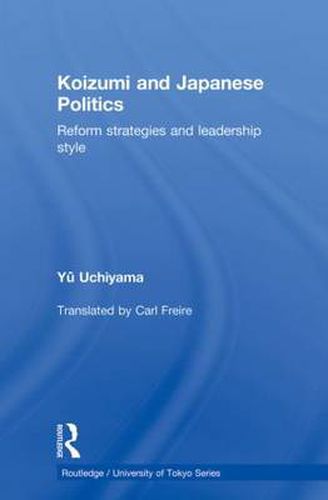
This book offers an empirical and theoretical study of the Koizumi administration, covering such issues as the characteristics of its political style, its domestic and foreign policies, and its larger historical significance. The key questions that guide its approach are: what enabled Koizumi to exercise unusually strong leadership, and what structural transformations of Japanese politics did he achieve?
Uchiyama looks at policy-making processes, newly created institutional arenas such as the Council on Economic and Fiscal Policy, Koizumi’s populist strategy, foreign policy, and neo-liberal convictions to assess the historical significance of his administration and seek out the basis for its wide public support.
Finally, the book undertakes a normative evaluation of the merits and demerits of the Koizumi administration’s political style, and compares it with the Abe and Fukuda administrations that came after. This book will be of interest to scholars and students with an interest in comparative politics, administrative reform, and contemporary Japan.
$9.00 standard shipping within Australia
FREE standard shipping within Australia for orders over $100.00
Express & International shipping calculated at checkout
Stock availability can be subject to change without notice. We recommend calling the shop or contacting our online team to check availability of low stock items. Please see our Shopping Online page for more details.
This book offers an empirical and theoretical study of the Koizumi administration, covering such issues as the characteristics of its political style, its domestic and foreign policies, and its larger historical significance. The key questions that guide its approach are: what enabled Koizumi to exercise unusually strong leadership, and what structural transformations of Japanese politics did he achieve?
Uchiyama looks at policy-making processes, newly created institutional arenas such as the Council on Economic and Fiscal Policy, Koizumi’s populist strategy, foreign policy, and neo-liberal convictions to assess the historical significance of his administration and seek out the basis for its wide public support.
Finally, the book undertakes a normative evaluation of the merits and demerits of the Koizumi administration’s political style, and compares it with the Abe and Fukuda administrations that came after. This book will be of interest to scholars and students with an interest in comparative politics, administrative reform, and contemporary Japan.
Search our extensive online catalogue.
