Readings Newsletter
Become a Readings Member to make your shopping experience even easier.
Sign in or sign up for free!
You’re not far away from qualifying for FREE standard shipping within Australia
You’ve qualified for FREE standard shipping within Australia
The cart is loading…


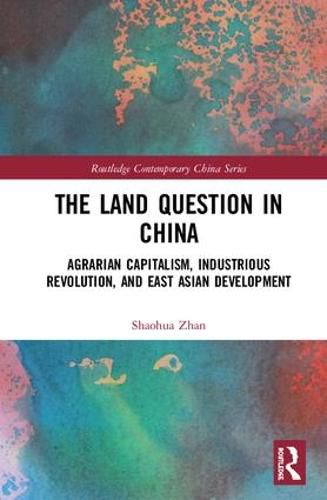
This book interrogates the inevitability and practicability of full-scale, land-intensive capitalist agriculture in China, whilst analyzing the labor-intensive industrious revolution as an alternative rural development path. It presents a critical account of the recent rise of agrarian capitalism as a force that would undermine hundreds of millions of people’s livelihoods in the populous country.
The Land Question in China traces the roots of the industrious revolution in China back to the eighteenth century, drawing comparisons between contemporary rural development and economic prosperity in the mid-Qing dynasty. In the context of neoliberal restructuring, it argues that vigorous rural development with broad access to land offers a solution to mitigate precarious urban employment and population pressure, while the transfer of land from villagers to large producers and urban investors will exacerbate these problems. Comparisons with South Africa and the East Asian economies of Japan, South Korea, and Taiwan further illustrate this and help to develop a new interpretation of the industrious revolution and its contemporary relevance.
Providing a critical examination of the new land reform in China from a world historical perspective, this book will be useful to students and scholars of sociology, economics, and development, as well as Chinese Studies.
$9.00 standard shipping within Australia
FREE standard shipping within Australia for orders over $100.00
Express & International shipping calculated at checkout
Stock availability can be subject to change without notice. We recommend calling the shop or contacting our online team to check availability of low stock items. Please see our Shopping Online page for more details.
This book interrogates the inevitability and practicability of full-scale, land-intensive capitalist agriculture in China, whilst analyzing the labor-intensive industrious revolution as an alternative rural development path. It presents a critical account of the recent rise of agrarian capitalism as a force that would undermine hundreds of millions of people’s livelihoods in the populous country.
The Land Question in China traces the roots of the industrious revolution in China back to the eighteenth century, drawing comparisons between contemporary rural development and economic prosperity in the mid-Qing dynasty. In the context of neoliberal restructuring, it argues that vigorous rural development with broad access to land offers a solution to mitigate precarious urban employment and population pressure, while the transfer of land from villagers to large producers and urban investors will exacerbate these problems. Comparisons with South Africa and the East Asian economies of Japan, South Korea, and Taiwan further illustrate this and help to develop a new interpretation of the industrious revolution and its contemporary relevance.
Providing a critical examination of the new land reform in China from a world historical perspective, this book will be useful to students and scholars of sociology, economics, and development, as well as Chinese Studies.
Search our extensive online catalogue.
