Readings Newsletter
Become a Readings Member to make your shopping experience even easier.
Sign in or sign up for free!
You’re not far away from qualifying for FREE standard shipping within Australia
You’ve qualified for FREE standard shipping within Australia
The cart is loading…


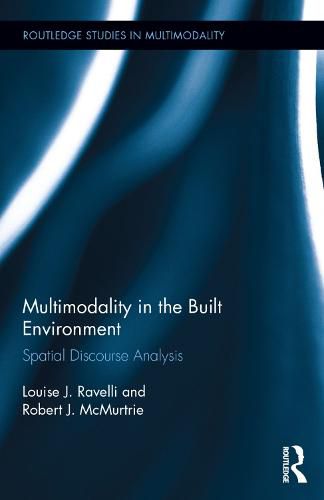
This book provides an extended exploration of the multimodal analysis of spatial (three-dimensional) texts of the built environment, culminating in a holistic approach termed Spatial Discourse Analysis (SpDA). Based on existing frameworks of multimodal analysis, this book applies, adapts, and extends these frameworks to spatial texts. The authors argue that choices in spatial design create meanings about what we perceive and how we can or should behave within spatial texts, influence how we feel in and about those spaces, and enable these texts to function as coherent wholes. Importantly, a spatial text, once built, is also a resource which is then used, and an essential aspect of understanding these texts is to consider what users themselves contribute to the meaning potential of these texts. The book takes the metafunctional approach familiar from Systemic-Functional Linguistics (SFL) and foregrounds each metafunction in turn (textual, interpersonal, experiential, and logical), in relation to the detailed analysis of a particular spatial text.
$9.00 standard shipping within Australia
FREE standard shipping within Australia for orders over $100.00
Express & International shipping calculated at checkout
Stock availability can be subject to change without notice. We recommend calling the shop or contacting our online team to check availability of low stock items. Please see our Shopping Online page for more details.
This book provides an extended exploration of the multimodal analysis of spatial (three-dimensional) texts of the built environment, culminating in a holistic approach termed Spatial Discourse Analysis (SpDA). Based on existing frameworks of multimodal analysis, this book applies, adapts, and extends these frameworks to spatial texts. The authors argue that choices in spatial design create meanings about what we perceive and how we can or should behave within spatial texts, influence how we feel in and about those spaces, and enable these texts to function as coherent wholes. Importantly, a spatial text, once built, is also a resource which is then used, and an essential aspect of understanding these texts is to consider what users themselves contribute to the meaning potential of these texts. The book takes the metafunctional approach familiar from Systemic-Functional Linguistics (SFL) and foregrounds each metafunction in turn (textual, interpersonal, experiential, and logical), in relation to the detailed analysis of a particular spatial text.
Search our extensive online catalogue.
