Readings Newsletter
Become a Readings Member to make your shopping experience even easier.
Sign in or sign up for free!
You’re not far away from qualifying for FREE standard shipping within Australia
You’ve qualified for FREE standard shipping within Australia
The cart is loading…


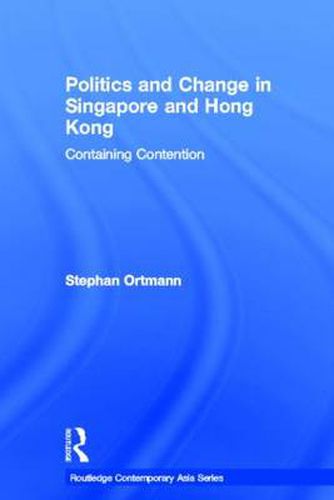
In democratization theory, Singapore continues to be a remarkable country for its extremely low level of contentious politics despite rapid economic development. In contrast, many different groups in Hong Kong have taken their demands to the streets since the 1970s. Even though there is an obvious difference in the willingness of the population to actively challenge the regime, the political developments of the two city-states show a similar pattern of political mobilization and government reaction. This book examines the changing pattern of contentious politics in the democratization process of these Asian city-states. It explores the causal connections between popular contention and democratization, using a multi-disciplinary approach with theoretical insights from the political sciences, sociology and psychology. The political process model is applied to provide further understanding of the patterns of interaction between contenders, opposition groups or social movements and the ruling elite. The book argues that differences in the strategies applied by the ruling elite explain why members of the opposition were empowered or obstructed in challenging the government.
$9.00 standard shipping within Australia
FREE standard shipping within Australia for orders over $100.00
Express & International shipping calculated at checkout
Stock availability can be subject to change without notice. We recommend calling the shop or contacting our online team to check availability of low stock items. Please see our Shopping Online page for more details.
In democratization theory, Singapore continues to be a remarkable country for its extremely low level of contentious politics despite rapid economic development. In contrast, many different groups in Hong Kong have taken their demands to the streets since the 1970s. Even though there is an obvious difference in the willingness of the population to actively challenge the regime, the political developments of the two city-states show a similar pattern of political mobilization and government reaction. This book examines the changing pattern of contentious politics in the democratization process of these Asian city-states. It explores the causal connections between popular contention and democratization, using a multi-disciplinary approach with theoretical insights from the political sciences, sociology and psychology. The political process model is applied to provide further understanding of the patterns of interaction between contenders, opposition groups or social movements and the ruling elite. The book argues that differences in the strategies applied by the ruling elite explain why members of the opposition were empowered or obstructed in challenging the government.
Search our extensive online catalogue.
