Readings Newsletter
Become a Readings Member to make your shopping experience even easier.
Sign in or sign up for free!
You’re not far away from qualifying for FREE standard shipping within Australia
You’ve qualified for FREE standard shipping within Australia
The cart is loading…


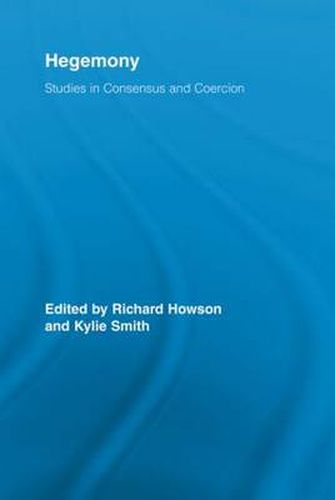
The originality and depth of Gramsci’s theory of hegemony is now evidenced in the wide-ranging intellectual applications within a growing corpus of research and writings that include social, political and cultural theory, historical interpretation, gender and globalization. The reason that hegemony has been so widely and diversely adopted lies in the unique way that Gramsci formulated the ‘problematics’ of structure/superstructure, coercion/consensus, materialism/idealism and regression/progression within the concept hegemony. However, in much of the contemporary literature the full complexity of hegemony is either obfuscated or ignored.
Hegemony, through comprehensive and systematic analyses of Gramsci’s formulation, a picture of hegemony as a complex syncretism of these dichotomies. In other words, hegemony is presented as a concept that is as much about aspiration and progressive politico-social relations as it is about regressive and dominative processes. Thus, the volume recognises and presents this complexity through a selection of contemporary theoretical as well as historico-social investigations that mark a significantly innovative moment in the work on hegemony.
$9.00 standard shipping within Australia
FREE standard shipping within Australia for orders over $100.00
Express & International shipping calculated at checkout
Stock availability can be subject to change without notice. We recommend calling the shop or contacting our online team to check availability of low stock items. Please see our Shopping Online page for more details.
The originality and depth of Gramsci’s theory of hegemony is now evidenced in the wide-ranging intellectual applications within a growing corpus of research and writings that include social, political and cultural theory, historical interpretation, gender and globalization. The reason that hegemony has been so widely and diversely adopted lies in the unique way that Gramsci formulated the ‘problematics’ of structure/superstructure, coercion/consensus, materialism/idealism and regression/progression within the concept hegemony. However, in much of the contemporary literature the full complexity of hegemony is either obfuscated or ignored.
Hegemony, through comprehensive and systematic analyses of Gramsci’s formulation, a picture of hegemony as a complex syncretism of these dichotomies. In other words, hegemony is presented as a concept that is as much about aspiration and progressive politico-social relations as it is about regressive and dominative processes. Thus, the volume recognises and presents this complexity through a selection of contemporary theoretical as well as historico-social investigations that mark a significantly innovative moment in the work on hegemony.
Search our extensive online catalogue.
