Readings Newsletter
Become a Readings Member to make your shopping experience even easier.
Sign in or sign up for free!
You’re not far away from qualifying for FREE standard shipping within Australia
You’ve qualified for FREE standard shipping within Australia
The cart is loading…


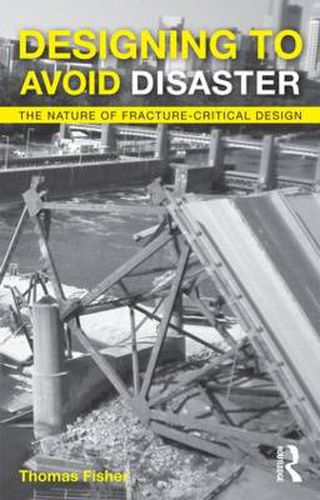
Recent catastrophic events, such as the I-35W bridge collapse, New Orleans flooding, the BP oil spill, Port au Prince’s destruction by earthquake, Fukushima nuclear plant’s devastation by tsunami, the Wall Street investment bank failures, and the housing foreclosure epidemic and the collapse of housing prices, all stem from what author Thomas Fisher calls fracture-critical design. This is design in which structures and systems have so little redundancy and so much interconnectedness and misguided efficiency that they fail completely if any one part does not perform as intended. If we, as architects, planners, engineers, and citizens are to predict and prepare for the next disaster, we need to recognize this error in our thinking and to understand how design thinking provides us with a way to anticipate unintended failures and increase the resiliency of the world in which we live.
In Designing to Avoid Disaster, the author discusses the context and cultural assumptions that have led to a number of disasters worldwide, describing the nature of fracture-critical design and why it has become so prevalent. He traces the impact of fracture-critical thinking on everything from our economy and politics to our educational and infrastructure systems to the communities, buildings, and products we inhabit and use everyday. And he shows how the natural environment and human population itself have both begun to move on a path toward a fracture-critical collapse that we need to do everything possible to avoid. We designed our way to such disasters and we can design our way out of them, with a number of possible solutions that Fisher provides.
$9.00 standard shipping within Australia
FREE standard shipping within Australia for orders over $100.00
Express & International shipping calculated at checkout
Stock availability can be subject to change without notice. We recommend calling the shop or contacting our online team to check availability of low stock items. Please see our Shopping Online page for more details.
Recent catastrophic events, such as the I-35W bridge collapse, New Orleans flooding, the BP oil spill, Port au Prince’s destruction by earthquake, Fukushima nuclear plant’s devastation by tsunami, the Wall Street investment bank failures, and the housing foreclosure epidemic and the collapse of housing prices, all stem from what author Thomas Fisher calls fracture-critical design. This is design in which structures and systems have so little redundancy and so much interconnectedness and misguided efficiency that they fail completely if any one part does not perform as intended. If we, as architects, planners, engineers, and citizens are to predict and prepare for the next disaster, we need to recognize this error in our thinking and to understand how design thinking provides us with a way to anticipate unintended failures and increase the resiliency of the world in which we live.
In Designing to Avoid Disaster, the author discusses the context and cultural assumptions that have led to a number of disasters worldwide, describing the nature of fracture-critical design and why it has become so prevalent. He traces the impact of fracture-critical thinking on everything from our economy and politics to our educational and infrastructure systems to the communities, buildings, and products we inhabit and use everyday. And he shows how the natural environment and human population itself have both begun to move on a path toward a fracture-critical collapse that we need to do everything possible to avoid. We designed our way to such disasters and we can design our way out of them, with a number of possible solutions that Fisher provides.
Search our extensive online catalogue.
