Readings Newsletter
Become a Readings Member to make your shopping experience even easier.
Sign in or sign up for free!
You’re not far away from qualifying for FREE standard shipping within Australia
You’ve qualified for FREE standard shipping within Australia
The cart is loading…


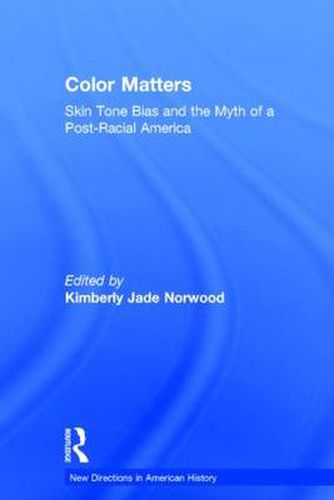
In the United States, as in many parts of the world, people are discriminated against based on the color of their skin. This type of skin tone bias, or colorism, is both related to and distinct from discrimination on the basis of race, with which it is often conflated. Preferential treatment of lighter skin tones over darker occurs within racial and ethnic groups as well as between them. While America has made progress in issues of race over the past decades, discrimination on the basis of color continues to be a constant and often unremarked part of life.
In Color Matters, Kimberly Jade Norwood has collected the most up-to-date research on this insidious form of discrimination, including perspectives from the disciplines of history, law, sociology, and psychology. Anchored with historical chapters that show how the influence and legacy of slavery have shaped the treatment of skin color in American society, the contributors to this volume bring to light the ways in which colorism affects us all–influencing what we wear, who we see on television, and even which child we might pick to adopt. Sure to be an eye-opening collection for anyone curious about how race and color continue to affect society, Color Matters provides students of race in America with wide-ranging overview of a crucial topic.
$9.00 standard shipping within Australia
FREE standard shipping within Australia for orders over $100.00
Express & International shipping calculated at checkout
Stock availability can be subject to change without notice. We recommend calling the shop or contacting our online team to check availability of low stock items. Please see our Shopping Online page for more details.
In the United States, as in many parts of the world, people are discriminated against based on the color of their skin. This type of skin tone bias, or colorism, is both related to and distinct from discrimination on the basis of race, with which it is often conflated. Preferential treatment of lighter skin tones over darker occurs within racial and ethnic groups as well as between them. While America has made progress in issues of race over the past decades, discrimination on the basis of color continues to be a constant and often unremarked part of life.
In Color Matters, Kimberly Jade Norwood has collected the most up-to-date research on this insidious form of discrimination, including perspectives from the disciplines of history, law, sociology, and psychology. Anchored with historical chapters that show how the influence and legacy of slavery have shaped the treatment of skin color in American society, the contributors to this volume bring to light the ways in which colorism affects us all–influencing what we wear, who we see on television, and even which child we might pick to adopt. Sure to be an eye-opening collection for anyone curious about how race and color continue to affect society, Color Matters provides students of race in America with wide-ranging overview of a crucial topic.
Search our extensive online catalogue.
