Readings Newsletter
Become a Readings Member to make your shopping experience even easier.
Sign in or sign up for free!
You’re not far away from qualifying for FREE standard shipping within Australia
You’ve qualified for FREE standard shipping within Australia
The cart is loading…


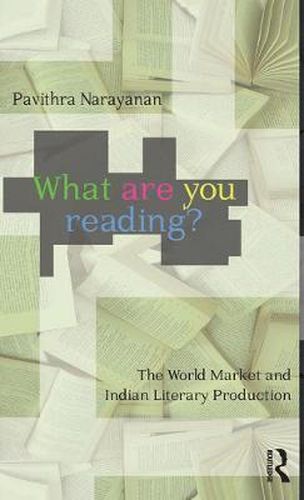
This book offers a material critique on various aspects of Indian literary production and its reception by its audiences. Taking a historical and contemporary lineage into account, the author variously discusses the social, political, and economic factors that impact upon and determine choices in the publishing world. Examining the constructions of the archive of postcolonial works by Indian writers in relation to nationalist histories, language wars, and the relationship between economic policies and literature, the book forcefully argues that why we read what we read is more than coincidental. Placing the rights of minoritized and disadvantaged communities at the heart of the analysis of India’s decolonization and industrial projects, the book attempts to address not just inequalities in the publishing world, but also social inequities engendered by global capitalism. Offering a critique of academics who act as cultural gatekeepers of intellectual production, the book finally underscores the disconnect between the academic theory and practice of scholars of postcolonial studies who argue against inequality and marginalization while simultaneously supporting hegemonic academic practices. This book will be of interest to scholars of development studies, cultural studies, literature, postcolonial studies, economics, and those studying globalization, as well as the interested lay reader.
$9.00 standard shipping within Australia
FREE standard shipping within Australia for orders over $100.00
Express & International shipping calculated at checkout
Stock availability can be subject to change without notice. We recommend calling the shop or contacting our online team to check availability of low stock items. Please see our Shopping Online page for more details.
This book offers a material critique on various aspects of Indian literary production and its reception by its audiences. Taking a historical and contemporary lineage into account, the author variously discusses the social, political, and economic factors that impact upon and determine choices in the publishing world. Examining the constructions of the archive of postcolonial works by Indian writers in relation to nationalist histories, language wars, and the relationship between economic policies and literature, the book forcefully argues that why we read what we read is more than coincidental. Placing the rights of minoritized and disadvantaged communities at the heart of the analysis of India’s decolonization and industrial projects, the book attempts to address not just inequalities in the publishing world, but also social inequities engendered by global capitalism. Offering a critique of academics who act as cultural gatekeepers of intellectual production, the book finally underscores the disconnect between the academic theory and practice of scholars of postcolonial studies who argue against inequality and marginalization while simultaneously supporting hegemonic academic practices. This book will be of interest to scholars of development studies, cultural studies, literature, postcolonial studies, economics, and those studying globalization, as well as the interested lay reader.
Search our extensive online catalogue.
