Readings Newsletter
Become a Readings Member to make your shopping experience even easier.
Sign in or sign up for free!
You’re not far away from qualifying for FREE standard shipping within Australia
You’ve qualified for FREE standard shipping within Australia
The cart is loading…


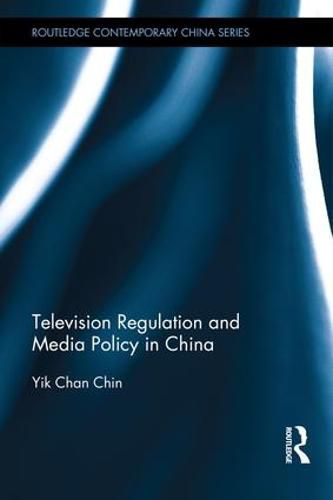
Despite common images of China in the West as a totalitarian communist party state, in reality the Chinese nation-state is now too large for the ruling party to develop unified national interests and nationwide lines of communication across diverse localities. Given the country’s deep involvement in world economy, the Chinese state is too small not to be concerned by encroachments on its communication sovereignty. In the context of intensifying global, local and national dynamics, how did China’s national television policy develop? How can China’s television industries retain their autonomy and find paths towards self-development? This book approaches the first question through a close examination of China’s national television policy and structure since the late 1990s. It argues that the older socialist state-owned TV system is transforming into a commercialized and mixed-ownership system. It has forced the central government to abolish geographic restrictions over the audience market, subsequently leading to the break up of the national television network’s market monopoly and its reposition from a cultural and ideological apparatus to a multifunctional TV organization. This book explores the second question through three case studies of the country’s television systems at both national and local levels. It argues that, rather than being a homogenous entity, China has demonstrated substantial local diversity and complex interactions between local, national and global media. The three case studies show that varied polices and development strategies have been adopted by television stations, reflecting different local circumstances and needs. This book is of interest to those postgraduates and academics studying Chinese media, politics and policy.
$9.00 standard shipping within Australia
FREE standard shipping within Australia for orders over $100.00
Express & International shipping calculated at checkout
Stock availability can be subject to change without notice. We recommend calling the shop or contacting our online team to check availability of low stock items. Please see our Shopping Online page for more details.
Despite common images of China in the West as a totalitarian communist party state, in reality the Chinese nation-state is now too large for the ruling party to develop unified national interests and nationwide lines of communication across diverse localities. Given the country’s deep involvement in world economy, the Chinese state is too small not to be concerned by encroachments on its communication sovereignty. In the context of intensifying global, local and national dynamics, how did China’s national television policy develop? How can China’s television industries retain their autonomy and find paths towards self-development? This book approaches the first question through a close examination of China’s national television policy and structure since the late 1990s. It argues that the older socialist state-owned TV system is transforming into a commercialized and mixed-ownership system. It has forced the central government to abolish geographic restrictions over the audience market, subsequently leading to the break up of the national television network’s market monopoly and its reposition from a cultural and ideological apparatus to a multifunctional TV organization. This book explores the second question through three case studies of the country’s television systems at both national and local levels. It argues that, rather than being a homogenous entity, China has demonstrated substantial local diversity and complex interactions between local, national and global media. The three case studies show that varied polices and development strategies have been adopted by television stations, reflecting different local circumstances and needs. This book is of interest to those postgraduates and academics studying Chinese media, politics and policy.
Search our extensive online catalogue.
