Readings Newsletter
Become a Readings Member to make your shopping experience even easier.
Sign in or sign up for free!
You’re not far away from qualifying for FREE standard shipping within Australia
You’ve qualified for FREE standard shipping within Australia
The cart is loading…


Environmental cost-benefit analysis was developed by economists in the belief that monetary valuation of the environmental repercussions of economic activity is essential if the environment
stands any chance of being included in government and business decisions. This volume examines the limitations of this monetary approach, and considers the alternatives. Three broad angles from which to view environmental values are presented: applying social psychology concepts which challenge standard approaches; introducing multidimensional and non-monetary techniques; and examining vested interest group and citizen participation in processes of environmental valuation. Combinations of these approaches are also covered. The contributions presented are a valuable resource for both environmental and ecological economists. This authoritative book will also prove useful for those with a general interest in the environment, including policy-makers and non-governmental organizations.
$9.00 standard shipping within Australia
FREE standard shipping within Australia for orders over $100.00
Express & International shipping calculated at checkout
Stock availability can be subject to change without notice. We recommend calling the shop or contacting our online team to check availability of low stock items. Please see our Shopping Online page for more details.
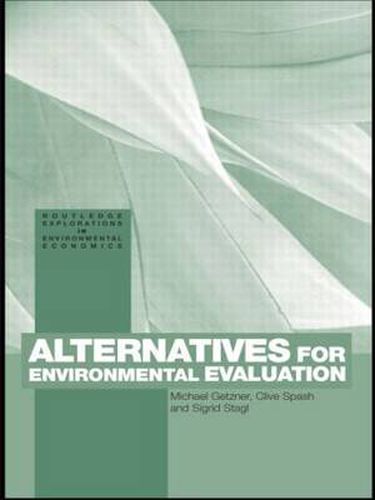
Environmental cost-benefit analysis was developed by economists in the belief that monetary valuation of the environmental repercussions of economic activity is essential if the environment
stands any chance of being included in government and business decisions. This volume examines the limitations of this monetary approach, and considers the alternatives. Three broad angles from which to view environmental values are presented: applying social psychology concepts which challenge standard approaches; introducing multidimensional and non-monetary techniques; and examining vested interest group and citizen participation in processes of environmental valuation. Combinations of these approaches are also covered. The contributions presented are a valuable resource for both environmental and ecological economists. This authoritative book will also prove useful for those with a general interest in the environment, including policy-makers and non-governmental organizations.
Search our extensive online catalogue.
