Readings Newsletter
Become a Readings Member to make your shopping experience even easier.
Sign in or sign up for free!
You’re not far away from qualifying for FREE standard shipping within Australia
You’ve qualified for FREE standard shipping within Australia
The cart is loading…


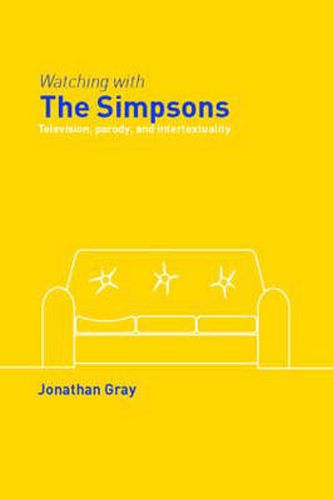
Using our favourite Springfield family as a case study, Watching with The Simpsons examines the textual and social role of parody in offering critical commentary on other television programs and genres.
Jonathan Gray brings together textual theory, discussions of television and the public sphere, and ideas of parody and comedy. Including primary audience research, it focuses on how The Simpsons has been able to talk back to three of television’s key genres - the sitcom, adverts and the news - and on how it holds the potential to short-circuit these genre’s meanings, power, and effects by provoking reinterpretations and offering more media literate recontextualizations.
Examining television and media studies theory, the text of The Simpsons, and the show’s audience, Gray attempts to fully situate the show’s parody and humour within the lived realities of its audiences. In doing so, he further explores the possibilities for popular entertainment television to discuss issues of political and social importance.
A must read for any student of media studies.
$9.00 standard shipping within Australia
FREE standard shipping within Australia for orders over $100.00
Express & International shipping calculated at checkout
Stock availability can be subject to change without notice. We recommend calling the shop or contacting our online team to check availability of low stock items. Please see our Shopping Online page for more details.
Using our favourite Springfield family as a case study, Watching with The Simpsons examines the textual and social role of parody in offering critical commentary on other television programs and genres.
Jonathan Gray brings together textual theory, discussions of television and the public sphere, and ideas of parody and comedy. Including primary audience research, it focuses on how The Simpsons has been able to talk back to three of television’s key genres - the sitcom, adverts and the news - and on how it holds the potential to short-circuit these genre’s meanings, power, and effects by provoking reinterpretations and offering more media literate recontextualizations.
Examining television and media studies theory, the text of The Simpsons, and the show’s audience, Gray attempts to fully situate the show’s parody and humour within the lived realities of its audiences. In doing so, he further explores the possibilities for popular entertainment television to discuss issues of political and social importance.
A must read for any student of media studies.
Search our extensive online catalogue.
