Readings Newsletter
Become a Readings Member to make your shopping experience even easier.
Sign in or sign up for free!
You’re not far away from qualifying for FREE standard shipping within Australia
You’ve qualified for FREE standard shipping within Australia
The cart is loading…


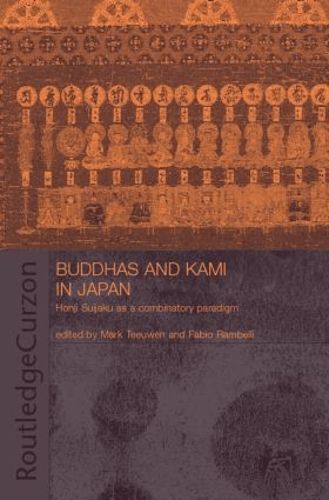
This volume offers a multidisciplinary approach to the combinatory tradition that dominated premodern and early modern Japanese religion, known as honji suijaku (‘originals and their traces’). It questions received, simplified accounts of the interactions between Shinto and Japanese Buddhism, and presents a more dynamic and variegated religious world, one in which the deities’ Buddhist originals and local traces did not constitute one-to-one associations, but complex combinations of multiple deities based on semiotic operations, doctrines, myths, and legends. The book’s essays, all based on specific case studies, discuss the honji suijaku paradigm from a number of different perspectives, always integrating historical and doctrinal analysis with interpretive insights.
$9.00 standard shipping within Australia
FREE standard shipping within Australia for orders over $100.00
Express & International shipping calculated at checkout
Stock availability can be subject to change without notice. We recommend calling the shop or contacting our online team to check availability of low stock items. Please see our Shopping Online page for more details.
This volume offers a multidisciplinary approach to the combinatory tradition that dominated premodern and early modern Japanese religion, known as honji suijaku (‘originals and their traces’). It questions received, simplified accounts of the interactions between Shinto and Japanese Buddhism, and presents a more dynamic and variegated religious world, one in which the deities’ Buddhist originals and local traces did not constitute one-to-one associations, but complex combinations of multiple deities based on semiotic operations, doctrines, myths, and legends. The book’s essays, all based on specific case studies, discuss the honji suijaku paradigm from a number of different perspectives, always integrating historical and doctrinal analysis with interpretive insights.
Search our extensive online catalogue.
