Readings Newsletter
Become a Readings Member to make your shopping experience even easier.
Sign in or sign up for free!
You’re not far away from qualifying for FREE standard shipping within Australia
You’ve qualified for FREE standard shipping within Australia
The cart is loading…


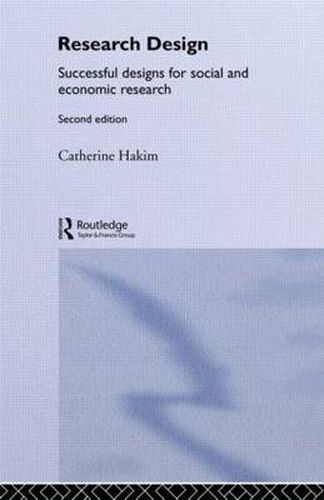
This work provides a practical overview for graduates and professional researchers of the central issues involved in the design of medium to large scale social and economic research. Covering both theoretical and policy research Hakim sets out the key features, strengths and limitations of eight main types of study, with illustrations from real-life research of the kinds of questions each can best be used to answer. This book also offers a more general discussion of strategies for choosing between one design and another, and on how different types of study can be successfully combined in wider-ranging research programmes. In this expanded second edition the author has added new material on areas of contemporary significance across the social and economic sciences. New features to this edition are: a chapter on cross-national comparative studies; more examples throughout the text of comparative research both within Europe and across modern societies; and discussions of student theses, advocacy research, selection effects and collaboration.
$9.00 standard shipping within Australia
FREE standard shipping within Australia for orders over $100.00
Express & International shipping calculated at checkout
Stock availability can be subject to change without notice. We recommend calling the shop or contacting our online team to check availability of low stock items. Please see our Shopping Online page for more details.
This work provides a practical overview for graduates and professional researchers of the central issues involved in the design of medium to large scale social and economic research. Covering both theoretical and policy research Hakim sets out the key features, strengths and limitations of eight main types of study, with illustrations from real-life research of the kinds of questions each can best be used to answer. This book also offers a more general discussion of strategies for choosing between one design and another, and on how different types of study can be successfully combined in wider-ranging research programmes. In this expanded second edition the author has added new material on areas of contemporary significance across the social and economic sciences. New features to this edition are: a chapter on cross-national comparative studies; more examples throughout the text of comparative research both within Europe and across modern societies; and discussions of student theses, advocacy research, selection effects and collaboration.
Search our extensive online catalogue.
