Readings Newsletter
Become a Readings Member to make your shopping experience even easier.
Sign in or sign up for free!
You’re not far away from qualifying for FREE standard shipping within Australia
You’ve qualified for FREE standard shipping within Australia
The cart is loading…


This title is printed to order. This book may have been self-published. If so, we cannot guarantee the quality of the content. In the main most books will have gone through the editing process however some may not. We therefore suggest that you be aware of this before ordering this book. If in doubt check either the author or publisher’s details as we are unable to accept any returns unless they are faulty. Please contact us if you have any questions.
Since the advent of the Human Genome Project, an increasing number of disease-causing genes have been discovered and, in some cases, genetic tests developed. However, this is only the first step. The second, much larger phase is the analysis of the total sequence. What does the rest of the DNA do? The answer to this question will be determined by computer prediction, expression profiling, and comparative genome analysis.
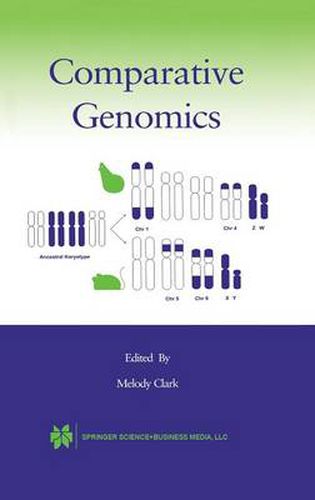
Comparative Genomics covers such topics as identifying novel genes, determining gene function, control sequences, and developmental switches. The book aims to demonstrate how different approaches taken with model organisms, such as mutation studies, expression profiling of cDNAs, in situ localization of message and comparative genome analysis (both at the gene and nucleotide level) will aid in our understanding of the results coming out of the Human Genome Project and contribute significantly to our understanding of how genes function.
$9.00 standard shipping within Australia
FREE standard shipping within Australia for orders over $100.00
Express & International shipping calculated at checkout
Stock availability can be subject to change without notice. We recommend calling the shop or contacting our online team to check availability of low stock items. Please see our Shopping Online page for more details.
This title is printed to order. This book may have been self-published. If so, we cannot guarantee the quality of the content. In the main most books will have gone through the editing process however some may not. We therefore suggest that you be aware of this before ordering this book. If in doubt check either the author or publisher’s details as we are unable to accept any returns unless they are faulty. Please contact us if you have any questions.
Since the advent of the Human Genome Project, an increasing number of disease-causing genes have been discovered and, in some cases, genetic tests developed. However, this is only the first step. The second, much larger phase is the analysis of the total sequence. What does the rest of the DNA do? The answer to this question will be determined by computer prediction, expression profiling, and comparative genome analysis.
Comparative Genomics covers such topics as identifying novel genes, determining gene function, control sequences, and developmental switches. The book aims to demonstrate how different approaches taken with model organisms, such as mutation studies, expression profiling of cDNAs, in situ localization of message and comparative genome analysis (both at the gene and nucleotide level) will aid in our understanding of the results coming out of the Human Genome Project and contribute significantly to our understanding of how genes function.
Search our extensive online catalogue.
