Readings Newsletter
Become a Readings Member to make your shopping experience even easier.
Sign in or sign up for free!
You’re not far away from qualifying for FREE standard shipping within Australia
You’ve qualified for FREE standard shipping within Australia
The cart is loading…


This title is printed to order. This book may have been self-published. If so, we cannot guarantee the quality of the content. In the main most books will have gone through the editing process however some may not. We therefore suggest that you be aware of this before ordering this book. If in doubt check either the author or publisher’s details as we are unable to accept any returns unless they are faulty. Please contact us if you have any questions.
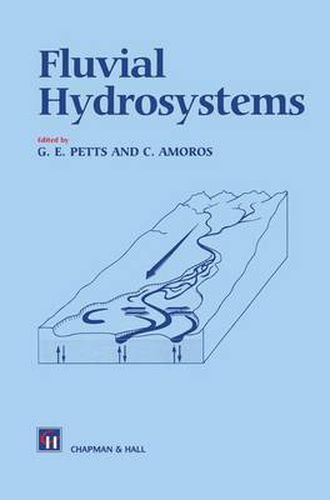
This text integrates ecological perspectives with geomorphological aspects of rivers, streams and other freshwater ecosystems. It takes a fresh approach to the more traditional texts of fluvial geomorphology, hydrology and freshwater ecology by taking a functional and holistic approach. It considers rivers as four dimensional complex systems of interacting patches: the upstream-downstream progression (headwater streams, middle-order high-energy systems, large alluvial rivers), the transverse dimension (mainstream, backwaters, oxbow lakes, marshes, carrs, riparian ecosystems), the vertical dimension (epigean and groundwaters) and the temporal dimension (natural variations and anthropegenic impacts). In each dimension, emphasis is placed on the relationships between fluvial dynamics and biotic processes and their relative effects on the spatial distribution of flora and fauna. The reversible process concept is demonstrated to be important for environmental management especially in explaining how human intervention can produce delayed impacts at locations remote from the site of the intervention. The book is structured with discussion of controls leading to hydro-geomorphological dynamics, spatial patterns of biota, interactions and change. Each chapter provides a novel review of each topic adapted to the hydrosystem concept. The final chapter looks at the applications of the fundamental scientific principles discussed to contemporary problems of river management, particularly environmental impact assessment and the evaluation of alternative management procedures. Finally research needs for achieving truly ecologically sound management of fluvial hydrosystems are identified. This book should be of interest to students of courses in fluvial geomorphology, water industry personnel, freshwater ecologists, fisheries, environmental scientists, conservationists, and civil engineers.
$9.00 standard shipping within Australia
FREE standard shipping within Australia for orders over $100.00
Express & International shipping calculated at checkout
Stock availability can be subject to change without notice. We recommend calling the shop or contacting our online team to check availability of low stock items. Please see our Shopping Online page for more details.
This title is printed to order. This book may have been self-published. If so, we cannot guarantee the quality of the content. In the main most books will have gone through the editing process however some may not. We therefore suggest that you be aware of this before ordering this book. If in doubt check either the author or publisher’s details as we are unable to accept any returns unless they are faulty. Please contact us if you have any questions.
This text integrates ecological perspectives with geomorphological aspects of rivers, streams and other freshwater ecosystems. It takes a fresh approach to the more traditional texts of fluvial geomorphology, hydrology and freshwater ecology by taking a functional and holistic approach. It considers rivers as four dimensional complex systems of interacting patches: the upstream-downstream progression (headwater streams, middle-order high-energy systems, large alluvial rivers), the transverse dimension (mainstream, backwaters, oxbow lakes, marshes, carrs, riparian ecosystems), the vertical dimension (epigean and groundwaters) and the temporal dimension (natural variations and anthropegenic impacts). In each dimension, emphasis is placed on the relationships between fluvial dynamics and biotic processes and their relative effects on the spatial distribution of flora and fauna. The reversible process concept is demonstrated to be important for environmental management especially in explaining how human intervention can produce delayed impacts at locations remote from the site of the intervention. The book is structured with discussion of controls leading to hydro-geomorphological dynamics, spatial patterns of biota, interactions and change. Each chapter provides a novel review of each topic adapted to the hydrosystem concept. The final chapter looks at the applications of the fundamental scientific principles discussed to contemporary problems of river management, particularly environmental impact assessment and the evaluation of alternative management procedures. Finally research needs for achieving truly ecologically sound management of fluvial hydrosystems are identified. This book should be of interest to students of courses in fluvial geomorphology, water industry personnel, freshwater ecologists, fisheries, environmental scientists, conservationists, and civil engineers.
Search our extensive online catalogue.
