Readings Newsletter
Become a Readings Member to make your shopping experience even easier.
Sign in or sign up for free!
You’re not far away from qualifying for FREE standard shipping within Australia
You’ve qualified for FREE standard shipping within Australia
The cart is loading…


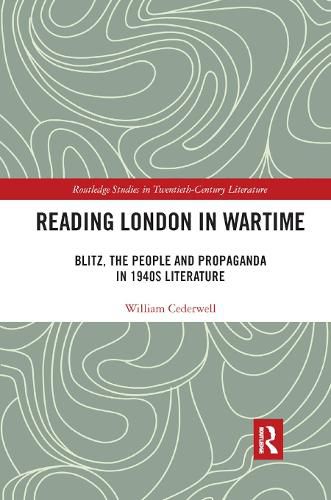
Reading London in Wartime: Blitz, the People and Propaganda in 1940s Literature presents an expansive variety of writers and genres, including non-fiction and film approaches, to build a comprehensive social picture of the atmosphere during wartime London. From blitz and austerity to the nagging insistency of propaganda, this volume examines the representation of London in wartime and early post-war literature through each writer’s unique perspective on the pressures of 1940s city life.
Exploring the use of London imagery, this book considers how literature redirects attention to individual, subjective experience at a time of enforced co-operation, uniformity and community. Unlike government information films and news broadcasts, which often used London to prop up prevailing cliches and stereotypes, and encouraged patriotic support for the war, literature had the freedom to express more recalcitrant truths. London writing of the 1940s was not a literature of opposition or dissent, but in offering more nuanced depictions of the period, it was a counterweight to propaganda and the general war temperament. In writing, the city becomes a more complex place, no longer the easy symbol of defiance and stoicism, of the shared sacrifice of ration book and war work.
$9.00 standard shipping within Australia
FREE standard shipping within Australia for orders over $100.00
Express & International shipping calculated at checkout
Stock availability can be subject to change without notice. We recommend calling the shop or contacting our online team to check availability of low stock items. Please see our Shopping Online page for more details.
Reading London in Wartime: Blitz, the People and Propaganda in 1940s Literature presents an expansive variety of writers and genres, including non-fiction and film approaches, to build a comprehensive social picture of the atmosphere during wartime London. From blitz and austerity to the nagging insistency of propaganda, this volume examines the representation of London in wartime and early post-war literature through each writer’s unique perspective on the pressures of 1940s city life.
Exploring the use of London imagery, this book considers how literature redirects attention to individual, subjective experience at a time of enforced co-operation, uniformity and community. Unlike government information films and news broadcasts, which often used London to prop up prevailing cliches and stereotypes, and encouraged patriotic support for the war, literature had the freedom to express more recalcitrant truths. London writing of the 1940s was not a literature of opposition or dissent, but in offering more nuanced depictions of the period, it was a counterweight to propaganda and the general war temperament. In writing, the city becomes a more complex place, no longer the easy symbol of defiance and stoicism, of the shared sacrifice of ration book and war work.
Search our extensive online catalogue.
