Readings Newsletter
Become a Readings Member to make your shopping experience even easier.
Sign in or sign up for free!
You’re not far away from qualifying for FREE standard shipping within Australia
You’ve qualified for FREE standard shipping within Australia
The cart is loading…


This book addresses the logical aspects of the foundations of scientific theories. Even though the relevance of formal methods in the study of scientific theories is now widely recognized and regaining prominence, the issues covered here are still not generally discussed in philosophy of science. The authors focus mainly on the role played by the underlying formal apparatuses employed in the construction of the models of scientific theories, relating the discussion with the so-called semantic approach to scientific theories. The book describes the role played by this metamathematical framework in three main aspects: considerations of formal languages employed to axiomatize scientific theories, the role of the axiomatic method itself, and the way set-theoretical structures, which play the role of the models of theories, are developed. The authors also discuss the differences and philosophical relevance of the two basic ways of aximoatizing a scientific theory, namely Patrick Suppes’ set theoretical predicates and the da Costa and Chuaqui approach. This book engages with important discussions of the nature of scientific theories and will be a useful resource for researchers and upper-level students working in philosophy of science.
$9.00 standard shipping within Australia
FREE standard shipping within Australia for orders over $100.00
Express & International shipping calculated at checkout
Stock availability can be subject to change without notice. We recommend calling the shop or contacting our online team to check availability of low stock items. Please see our Shopping Online page for more details.
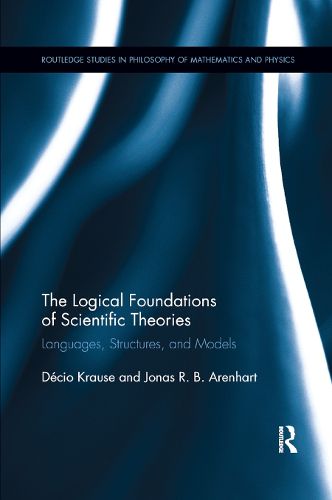
This book addresses the logical aspects of the foundations of scientific theories. Even though the relevance of formal methods in the study of scientific theories is now widely recognized and regaining prominence, the issues covered here are still not generally discussed in philosophy of science. The authors focus mainly on the role played by the underlying formal apparatuses employed in the construction of the models of scientific theories, relating the discussion with the so-called semantic approach to scientific theories. The book describes the role played by this metamathematical framework in three main aspects: considerations of formal languages employed to axiomatize scientific theories, the role of the axiomatic method itself, and the way set-theoretical structures, which play the role of the models of theories, are developed. The authors also discuss the differences and philosophical relevance of the two basic ways of aximoatizing a scientific theory, namely Patrick Suppes’ set theoretical predicates and the da Costa and Chuaqui approach. This book engages with important discussions of the nature of scientific theories and will be a useful resource for researchers and upper-level students working in philosophy of science.
Search our extensive online catalogue.
