Readings Newsletter
Become a Readings Member to make your shopping experience even easier.
Sign in or sign up for free!
You’re not far away from qualifying for FREE standard shipping within Australia
You’ve qualified for FREE standard shipping within Australia
The cart is loading…


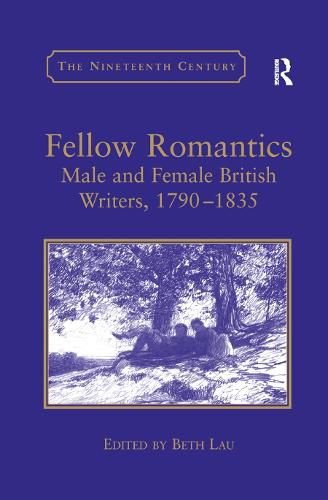
Beginning with the premise that men and women of the Romantic period were lively interlocutors who participated in many of the same literary traditions and experiments, Fellow Romantics offers an inspired counterpoint to studies of Romantic-era women writers that stress their differences from their male contemporaries. As they advance the work of scholars who have questioned binary approaches to studying male and female writers, the contributors variously link, among others, Charlotte Smith and William Wordsworth, Mary Robinson and Samuel Taylor Coleridge, Felicia Hemans and Percy Bysshe Shelley, Jane Austen and the male Romantic poets. These pairings invite us to see anew the work of both male and female writers by drawing our attention to frequently neglected aspects of each writer’s art. Here we see writers of both sexes interacting in their shared historical moment, while the contributors reorient our attention toward common points of engagement between male and female authors. What is gained is a more textured understanding of the period that will serve as a model for future studies.
$9.00 standard shipping within Australia
FREE standard shipping within Australia for orders over $100.00
Express & International shipping calculated at checkout
Stock availability can be subject to change without notice. We recommend calling the shop or contacting our online team to check availability of low stock items. Please see our Shopping Online page for more details.
Beginning with the premise that men and women of the Romantic period were lively interlocutors who participated in many of the same literary traditions and experiments, Fellow Romantics offers an inspired counterpoint to studies of Romantic-era women writers that stress their differences from their male contemporaries. As they advance the work of scholars who have questioned binary approaches to studying male and female writers, the contributors variously link, among others, Charlotte Smith and William Wordsworth, Mary Robinson and Samuel Taylor Coleridge, Felicia Hemans and Percy Bysshe Shelley, Jane Austen and the male Romantic poets. These pairings invite us to see anew the work of both male and female writers by drawing our attention to frequently neglected aspects of each writer’s art. Here we see writers of both sexes interacting in their shared historical moment, while the contributors reorient our attention toward common points of engagement between male and female authors. What is gained is a more textured understanding of the period that will serve as a model for future studies.
Search our extensive online catalogue.
