Readings Newsletter
Become a Readings Member to make your shopping experience even easier.
Sign in or sign up for free!
You’re not far away from qualifying for FREE standard shipping within Australia
You’ve qualified for FREE standard shipping within Australia
The cart is loading…


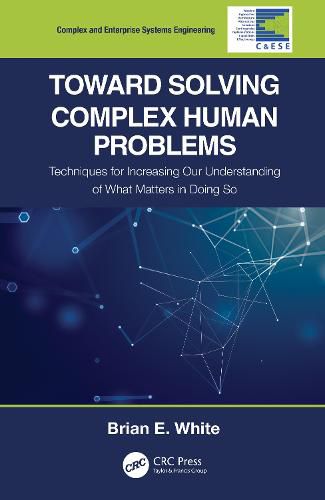
This book serves three basic purposes: (1) a tutorial-type reference for complex systems engineering (CSE) concepts and associated terminology, (2) a recommendation of a proposed methodology showing how the evolving practice of CSE can lead to a more unified theory, and (3) a complex systems (CSs) initiative for organizations to invest some of their resources toward helping to make the world a better place.
A wide variety of technical practitioners-e.g., developers of new or improved systems (particularly systems engineers), program and project managers, associated staff/workers, funders and overseers, government executives, military officers, systems acquisition personnel, contract specialists, owners of large and small businesses, professional society members, and CS researchers-may be interested in further exploring these topics.
Readers will learn more about CS characteristics and behaviors and CSE principles and will therefore be able to focus on techniques that will better serve them in their everyday work environments in dealing with complexity. The fundamental observation is that many systems inherently involve a deeper complexity because stakeholders are engaged in the enterprise. This means that such CSs are more difficult to invent, create, or improve upon because no one can be in total control since people cannot be completely controlled. Therefore, one needs to concentrate on trying to influence progress, then wait a suitable amount of time to see what happens, iterating as necessary. With just three chapters in this book, it seems to make sense to provide a tutorial introduction that readers can peruse only as necessary, considering their background and understanding, then a chapter laying out the suggested artifacts and methodology, followed by a chapter emphasizing worthwhile areas of application.
$9.00 standard shipping within Australia
FREE standard shipping within Australia for orders over $100.00
Express & International shipping calculated at checkout
Stock availability can be subject to change without notice. We recommend calling the shop or contacting our online team to check availability of low stock items. Please see our Shopping Online page for more details.
This book serves three basic purposes: (1) a tutorial-type reference for complex systems engineering (CSE) concepts and associated terminology, (2) a recommendation of a proposed methodology showing how the evolving practice of CSE can lead to a more unified theory, and (3) a complex systems (CSs) initiative for organizations to invest some of their resources toward helping to make the world a better place.
A wide variety of technical practitioners-e.g., developers of new or improved systems (particularly systems engineers), program and project managers, associated staff/workers, funders and overseers, government executives, military officers, systems acquisition personnel, contract specialists, owners of large and small businesses, professional society members, and CS researchers-may be interested in further exploring these topics.
Readers will learn more about CS characteristics and behaviors and CSE principles and will therefore be able to focus on techniques that will better serve them in their everyday work environments in dealing with complexity. The fundamental observation is that many systems inherently involve a deeper complexity because stakeholders are engaged in the enterprise. This means that such CSs are more difficult to invent, create, or improve upon because no one can be in total control since people cannot be completely controlled. Therefore, one needs to concentrate on trying to influence progress, then wait a suitable amount of time to see what happens, iterating as necessary. With just three chapters in this book, it seems to make sense to provide a tutorial introduction that readers can peruse only as necessary, considering their background and understanding, then a chapter laying out the suggested artifacts and methodology, followed by a chapter emphasizing worthwhile areas of application.
Search our extensive online catalogue.
