Readings Newsletter
Become a Readings Member to make your shopping experience even easier.
Sign in or sign up for free!
You’re not far away from qualifying for FREE standard shipping within Australia
You’ve qualified for FREE standard shipping within Australia
The cart is loading…


People tend to enjoy listening to music or watching television, sleeping at night and celebrating birthdays. Plants tend to grow and thrive in sunlight and mild temperatures. We also know that tendencies are not perfectly regular and that there are patterns in the natural world, which are reliable to a degree, but not absolute. What should we make of a world where things tend to be one way but could be another? Is there a position between necessity and possibility? If there is, what are the implications for science, knowledge and ethics?
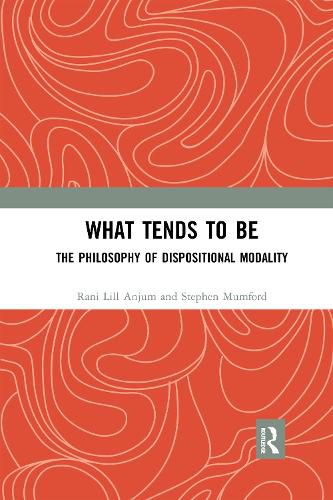
This book explores these questions and is the first full-length treatment of the philosophy of tendencies. Anjum and Mumford argue that although the philosophical language of tendencies has been around since Aristotle, there has not been any serious commitment to the irreducible modality that they involve. They also argue that the acceptance of an irreducible and sui generis tendential modality ought to be the fundamental commitment of any genuine realism about dispositions or powers. It is the dispositional modality that makes dispositions authentically disposition-like. Armed with this theory the authors apply it to a variety of key philosophical topics such as chance, causation, epistemology and free will.
$9.00 standard shipping within Australia
FREE standard shipping within Australia for orders over $100.00
Express & International shipping calculated at checkout
Stock availability can be subject to change without notice. We recommend calling the shop or contacting our online team to check availability of low stock items. Please see our Shopping Online page for more details.
People tend to enjoy listening to music or watching television, sleeping at night and celebrating birthdays. Plants tend to grow and thrive in sunlight and mild temperatures. We also know that tendencies are not perfectly regular and that there are patterns in the natural world, which are reliable to a degree, but not absolute. What should we make of a world where things tend to be one way but could be another? Is there a position between necessity and possibility? If there is, what are the implications for science, knowledge and ethics?
This book explores these questions and is the first full-length treatment of the philosophy of tendencies. Anjum and Mumford argue that although the philosophical language of tendencies has been around since Aristotle, there has not been any serious commitment to the irreducible modality that they involve. They also argue that the acceptance of an irreducible and sui generis tendential modality ought to be the fundamental commitment of any genuine realism about dispositions or powers. It is the dispositional modality that makes dispositions authentically disposition-like. Armed with this theory the authors apply it to a variety of key philosophical topics such as chance, causation, epistemology and free will.
Search our extensive online catalogue.
