Readings Newsletter
Become a Readings Member to make your shopping experience even easier.
Sign in or sign up for free!
You’re not far away from qualifying for FREE standard shipping within Australia
You’ve qualified for FREE standard shipping within Australia
The cart is loading…


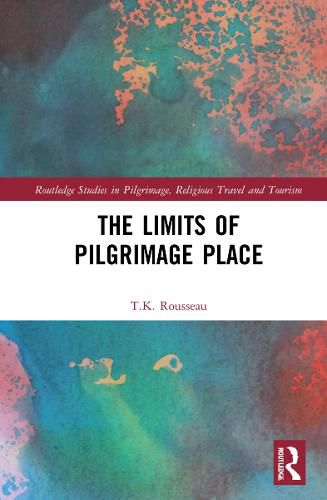
Through case studies of three pilgrimage sites related to the Virgin Mary, this book explores how pilgrimage places in today’s globalized world do not exist as contained spaces but have porous boundaries, both physically and conceptually.
Taking an interdisciplinary approach that draws on art history and heritage studies, the book considers the cathedral of Chartres, France; Medjugorje in Bosnia and Herzegovina; and the House of Mary near Ephesus, Turkey. In all three sites, the place of pilgrimage accommodates multiple different purposes and groups of people, intermingling devotional and commercial aspects, different memory narratives, and heterogeneous audiences.
By mapping these porous boundaries, the book calls into question how we define pilgrimage place, and shows how pilgrimage sites are not set apart from the everyday world, but intimately connected with wider cultural, political, and material dynamics. This study will be relevant to scholars engaging with issues of pilgrimage, cultural heritage, and art across religious studies, art history, anthropology, and sociology.
$9.00 standard shipping within Australia
FREE standard shipping within Australia for orders over $100.00
Express & International shipping calculated at checkout
Stock availability can be subject to change without notice. We recommend calling the shop or contacting our online team to check availability of low stock items. Please see our Shopping Online page for more details.
Through case studies of three pilgrimage sites related to the Virgin Mary, this book explores how pilgrimage places in today’s globalized world do not exist as contained spaces but have porous boundaries, both physically and conceptually.
Taking an interdisciplinary approach that draws on art history and heritage studies, the book considers the cathedral of Chartres, France; Medjugorje in Bosnia and Herzegovina; and the House of Mary near Ephesus, Turkey. In all three sites, the place of pilgrimage accommodates multiple different purposes and groups of people, intermingling devotional and commercial aspects, different memory narratives, and heterogeneous audiences.
By mapping these porous boundaries, the book calls into question how we define pilgrimage place, and shows how pilgrimage sites are not set apart from the everyday world, but intimately connected with wider cultural, political, and material dynamics. This study will be relevant to scholars engaging with issues of pilgrimage, cultural heritage, and art across religious studies, art history, anthropology, and sociology.
Search our extensive online catalogue.
