Readings Newsletter
Become a Readings Member to make your shopping experience even easier.
Sign in or sign up for free!
You’re not far away from qualifying for FREE standard shipping within Australia
You’ve qualified for FREE standard shipping within Australia
The cart is loading…


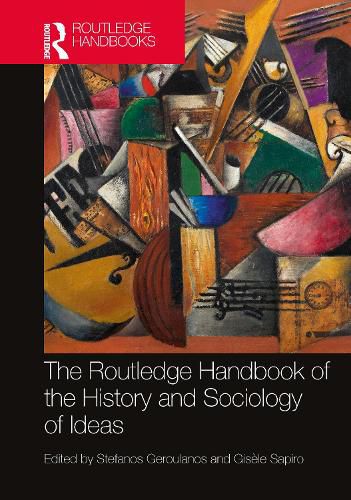
The Routledge Handbook of the History and Sociology of Ideas establishes a new and comprehensive way of working in the history and sociology of ideas, in order to obviate several longstanding gaps that have prevented a fruitful interdisciplinary and international dialogues. Pushing global intellectual history forward, it uses methodological innovations in the history of concepts, gender history, imperial history, and history of normativity, many of which have emerged out of intellectual history in recent years, and it especially foregrounds the role of field theory for delimiting objects of study but also in studying transnational history and migration of persons and ideas.
The chapters also explore how intellectual history crosses the study of particular domains: law, politics, economy, science, life sciences, social and human sciences, book history, literature, and emotions.
$9.00 standard shipping within Australia
FREE standard shipping within Australia for orders over $100.00
Express & International shipping calculated at checkout
Stock availability can be subject to change without notice. We recommend calling the shop or contacting our online team to check availability of low stock items. Please see our Shopping Online page for more details.
The Routledge Handbook of the History and Sociology of Ideas establishes a new and comprehensive way of working in the history and sociology of ideas, in order to obviate several longstanding gaps that have prevented a fruitful interdisciplinary and international dialogues. Pushing global intellectual history forward, it uses methodological innovations in the history of concepts, gender history, imperial history, and history of normativity, many of which have emerged out of intellectual history in recent years, and it especially foregrounds the role of field theory for delimiting objects of study but also in studying transnational history and migration of persons and ideas.
The chapters also explore how intellectual history crosses the study of particular domains: law, politics, economy, science, life sciences, social and human sciences, book history, literature, and emotions.
Search our extensive online catalogue.
