Readings Newsletter
Become a Readings Member to make your shopping experience even easier.
Sign in or sign up for free!
You’re not far away from qualifying for FREE standard shipping within Australia
You’ve qualified for FREE standard shipping within Australia
The cart is loading…


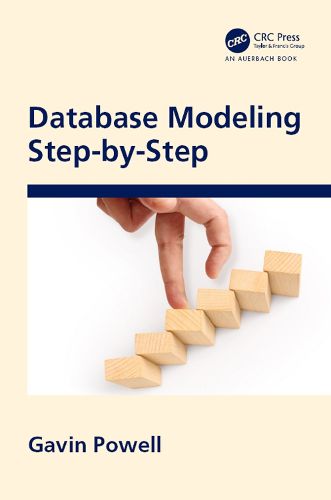
With the aim of simplifying relational database modeling, Database Modeling Step-by-Step presents the standard approach to database normalization and then adds its own approach, which is a more simplistic, intuitive way to building relational database models. Going from basics to contemporary topics, the book opens with relational data modeling and ends with BigData database modeling following a road map of the evolution in relational modeling and including brief introductions to data warehousing and BigData modeling. A break-down of the elements of a model explains what makes up a relational data model. This is followed by a comparison between standard normalization and a more simplistic intuitive approach to data modeling that a beginner can follow and understand.
A brief chapter explains how to use the database programming language SQL (Structured Query Language), which reads from and writes to a relational database. SQL is fundamental to data modeling because it helps in understanding how the model is used. In addition to the relational model, the last three chapters cover important modern world topics including denormalization that leads into data warehouses and BigData database modeling. The book explains how there is not much to logical data modeling in BigData databases because as they are often schema-less, which means that BigData databases do not have schemas embedded into the database itself, they have no metadata and thus not much of a logical data model.
Online bonus chapters include a case study that covers relational data modeling and are available at the author’s web site: www.oracletroubleshooter.com/datamodeling.html
$9.00 standard shipping within Australia
FREE standard shipping within Australia for orders over $100.00
Express & International shipping calculated at checkout
Stock availability can be subject to change without notice. We recommend calling the shop or contacting our online team to check availability of low stock items. Please see our Shopping Online page for more details.
With the aim of simplifying relational database modeling, Database Modeling Step-by-Step presents the standard approach to database normalization and then adds its own approach, which is a more simplistic, intuitive way to building relational database models. Going from basics to contemporary topics, the book opens with relational data modeling and ends with BigData database modeling following a road map of the evolution in relational modeling and including brief introductions to data warehousing and BigData modeling. A break-down of the elements of a model explains what makes up a relational data model. This is followed by a comparison between standard normalization and a more simplistic intuitive approach to data modeling that a beginner can follow and understand.
A brief chapter explains how to use the database programming language SQL (Structured Query Language), which reads from and writes to a relational database. SQL is fundamental to data modeling because it helps in understanding how the model is used. In addition to the relational model, the last three chapters cover important modern world topics including denormalization that leads into data warehouses and BigData database modeling. The book explains how there is not much to logical data modeling in BigData databases because as they are often schema-less, which means that BigData databases do not have schemas embedded into the database itself, they have no metadata and thus not much of a logical data model.
Online bonus chapters include a case study that covers relational data modeling and are available at the author’s web site: www.oracletroubleshooter.com/datamodeling.html
Search our extensive online catalogue.
