Readings Newsletter
Become a Readings Member to make your shopping experience even easier.
Sign in or sign up for free!
You’re not far away from qualifying for FREE standard shipping within Australia
You’ve qualified for FREE standard shipping within Australia
The cart is loading…


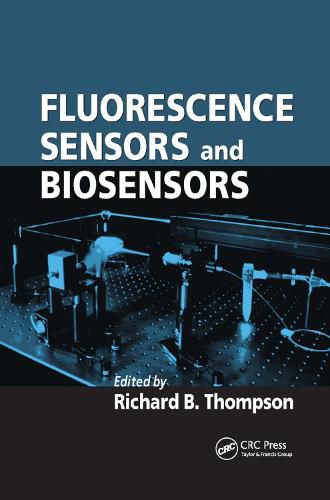
Fluorescence-based sensing is a significant technique used in prominent fields such as fluorescence-activated cell sorting, DNA sequencing, high-throughput screening, and clinical diagnostics. Fluorescence Sensors and Biosensors emphasizes the most recent developments and emerging technologies with the broadest impacts.
The text begins with the development of aptamers (oligoribonucleotides) and biorecognition techniques based on periplasmic binding proteins. The following chapters review the molecular beacon approach for DNA recognition, describe resonance energy transfer (FRET) in sensing, and present the use of carbonic anhydrase recognition platform for metal ion determination and imaging. The book explores the advantages of fluorophores, fluorescent labels, sensor and assay construction, metal-enhanced fluorescence, phosphorescent labels, and lab-on-a-chip applications. It also describes new anion-selective fluorescent probes used as analytes in clinical determinations.
The final chapters highlight the application of fluorescence sensing technology to several practical problems, such as the development of planar waveguide biosensors for clinical diagnostics and the adaptation of fluorescence-based sensing approaches for biochemical production by fermentation. The book also discusses the measurement of analytes, such as free zinc ions, at ultratrace levels in biological specimens. Written by internationally renowned authors in their fields, Fluorescence Sensors and Biosensors provides an up-to-date account of fluorescence-based sensors focused on practical applications in biotechnology, analytical chemistry, and biomedicine.
$9.00 standard shipping within Australia
FREE standard shipping within Australia for orders over $100.00
Express & International shipping calculated at checkout
Stock availability can be subject to change without notice. We recommend calling the shop or contacting our online team to check availability of low stock items. Please see our Shopping Online page for more details.
Fluorescence-based sensing is a significant technique used in prominent fields such as fluorescence-activated cell sorting, DNA sequencing, high-throughput screening, and clinical diagnostics. Fluorescence Sensors and Biosensors emphasizes the most recent developments and emerging technologies with the broadest impacts.
The text begins with the development of aptamers (oligoribonucleotides) and biorecognition techniques based on periplasmic binding proteins. The following chapters review the molecular beacon approach for DNA recognition, describe resonance energy transfer (FRET) in sensing, and present the use of carbonic anhydrase recognition platform for metal ion determination and imaging. The book explores the advantages of fluorophores, fluorescent labels, sensor and assay construction, metal-enhanced fluorescence, phosphorescent labels, and lab-on-a-chip applications. It also describes new anion-selective fluorescent probes used as analytes in clinical determinations.
The final chapters highlight the application of fluorescence sensing technology to several practical problems, such as the development of planar waveguide biosensors for clinical diagnostics and the adaptation of fluorescence-based sensing approaches for biochemical production by fermentation. The book also discusses the measurement of analytes, such as free zinc ions, at ultratrace levels in biological specimens. Written by internationally renowned authors in their fields, Fluorescence Sensors and Biosensors provides an up-to-date account of fluorescence-based sensors focused on practical applications in biotechnology, analytical chemistry, and biomedicine.
Search our extensive online catalogue.
